

An environmental restoration company bought some vacated farmland in northern Baltimore County, part of the Piney Run watershed, where wetlands probably used to be. The land had probably been farmed since the Colonial days, the Baltimore Sun reports. They surveyed the land and discovered fish—brook trout, brown trout, minnows, dace, etc.—in a stream on the property.
Environmentalists get excited about stuff like this, because it means the springs that feed that stream are giving off healthy water, cold water, that can support an ecosystem.
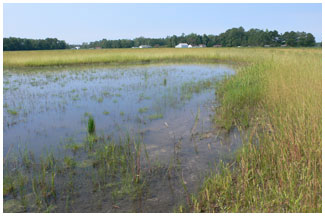
Now the company, Ecotone, plans to move forward with the next phase of the project: restoring the entire 75 acres to wetlands, as it probably was before a farmer drained it decades ago.
Ecotone partners with developers who build strip malls, houses, and so on. A little analogy using trees can help to understand how environmental laws work—or at least how land developers see the environmental laws. Let’s say a developer has to remove a tree to build a house. If he needs to do that, a tree has to be planted somewhere else so that the total number of trees doesn’t decrease.

It’s a little more complicated than “tree” currency, of course. The government uses “credits” to determine how much of a decrease occurs for each development project, usually expressed in terms of dollars. If the government says, in other words, that building a strip mall will require $1,000,000 of these environmental mitigation credits, then a developer must provide that many credits to offset the environmental damage the strip mall project will cause.
Ecotone, in restoring this wetland, will gain environmental credits, which it can then sell to developers. It wasn’t reported how much credit Ecotone will get for this restoration—or how much developers will be willing to pay them for those credits—but the profit Ecotone stands to gain is only one positive. The real winner is the environment: what was once fairly useless farmland now has now been restored to wetlands.
More people should do this kind of thing with land that has become less useful or less profitable. If Ecotone’s other projects are any indication, the land will increase in value after Ecotone does their thing, and developments elsewhere will be able to proceed, thanks to the credit-bank provided by Ecotone. Here’s what their website says about another project they completed:
The project was designed, permitted, constructed, and planted during the period between March 2006 and April 2007. The project resulted in the restoration of 40 acres of riverine wetlands which have proven to persistent, robust hydrology and provide significant habitat for a variety of wildlife, including breeding areas for numerous amphibian species. The end result of the project provided a significant financial return for the landowner on marginally productive farmland, vital wetland restoration and wildlife habitat, and increased water quality to an impaired watershed.
When so many companies go the other way and downgrade the natural environment, Ecotone is restoring it. As one Baltimore Sun columnist calls it, a “win-win.”