

Please read coverage of the historic sequence of events in Egypt this week in the New York Times, here, or on the BBC’s website, here.
We turn our attention to the US, where, in 1944, Learned Hand delivered a speech known as the “I Am an American Day Address.” It has been included as an exemplar text in an appendix of the Common Core State Standards, to be used for English/language arts, grades 9–10 (PDF, see p 125):
We have gathered here to affirm a faith, a faith in a common purpose, a common conviction, a common devotion. Some of us have chosen America as the land of our adoption; the rest have come from those who did the same. For this reason we have some right to consider ourselves a picked group, a group of those who had the courage to break from the past and brave the dangers and the loneliness of a strange land. What was the object that nerved us, or those who went before us, to this choice? We sought liberty; freedom from oppression, freedom from want, freedom to be ourselves. This we then sought; this we now believe that we are by way of winning. What do we mean when we say that first of all we seek liberty? I often wonder whether we do not rest our hopes too much upon constitutions, upon laws and upon courts. These are false hopes; believe me, these are false hopes. Liberty lies in the hearts of men and women; when it dies there, no constitution, no law, no court can even do much to help it. While it lies there it needs no constitution, no law, no court to save it. And what is this liberty which must lie in the hearts of men and women? It is not the ruthless, the unbridled will; it is not freedom to do as one likes. That is the denial of liberty, and leads straight to its overthrow. A society in which men recognize no check upon their freedom soon becomes a society where freedom is the possession of only a savage few; as we have learned to our sorrow.
What then is the spirit of liberty? I cannot define it; I can only tell you my own faith. The spirit of liberty is the spirit which is not too sure that it is right; the spirit of liberty is the spirit which seeks to understand the mind of other men and women; the spirit of liberty is the spirit which weighs their interests alongside its own without bias; the spirit of liberty remembers that not even a sparrow falls to earth unheeded; the spirit of liberty is the spirit of Him who, near two thousand years ago, taught mankind that lesson it has never learned but never quite forgotten; that there may be a kingdom where the least shall be heard and considered side by side with the greatest. And now in that spirit, that spirit of an America which has never been, and which may never be; nay, which never will be except as the conscience and courage of Americans create it; yet in the spirit of that America which lies hidden in some form in the aspirations of us all; in the spirit of that America for which our young men are at this moment fighting and dying; in that spirit of liberty and of America I ask you to rise and with me pledge our faith in the glorious destiny of our beloved country.
Aligning with standard RI.9–10.8, students might be asked to evaluate the argument and specific claims about the “spirit of liberty” in Learned Hand’s “I Am an American Day Address,” assessing the relevance and sufficiency of the evidence and the validity of his reasoning.
So, how could you do that? My feeble attempt would first start by identifying the claims about the spirit of liberty asserted by the speech. These might be that the spirit of liberty:
- Is in the heart, not in a constitution, set of laws, or court rulings.
- Doesn’t mean being able to do whatever you want to do.
- Isn’t sure of its own correctness, but considers others’ interests and opinions without bias.
- Isn’t even sure death is the end, but learns lessons from religious figures who died for others.
- Isn’t really based in reality but in our courage, hope, and idealism of fighting for country.
As we are asked to “evaluate” the argument, that usually means giving it some sort of rating or grade. We are asked to examine the “relevance” and “sufficiency” of evidence used to support the speech’s argument as well as the validity of Mr Hand’s reasoning in the speech.
I would rate both the sufficiency and relevance as “good” at least. For each claim, Mr Hand stays on point to present additional evidence in support of the point. In describing the spirit of liberty as being in the heart instead of in a constitution or laws, for example, he first tells us, twice, that relying on constitutions is a false hope. His logic is sound in that he says if the spirit of liberty doesn’t exist in a person’s heart, there’s nothing any court of law or any constitution can do to help the person find that spirit. And if a person has the true spirit of liberty in his heart, there’s no constitution or law that can take it away.
So, while the reasoning is valid, Mr Hand doesn’t seem to present evidence here, after the claim is stated, to support those assertions. But look at the speech’s introduction, about people coming to America from foreign countries. Here, evidence is definitely presented about having a spirit in the heart. People wouldn’t be here if the spirit of liberty weren’t in their hearts, he seems to say, regardless of what our Constitution says. And, if people didn’t have the spirit of liberty in their hearts, they—or their ancestors—would never have made the trip, even though our Constitution is a top-notch governing document.
Etc., etc. Just do the same type of thing with the other claims, and reach your own answers about Mr Hand’s arguments. One difference between America and Egypt is that the people who overthrew the government of President Mohamed Morsi mostly didn’t come to Egypt as a choice. They and generations of their ancestors were born there.
But the spirit of liberty still resounds in many of the words coming from protesters. The BBC said, here, that for millions of poor people, the stagnant economy, caught in collapsed sources of income like tourism, rising food prices and a growing population dependent on subsidised bread, drove the coup d’état. They generally characterize Mr Morsi’s calls for dialogue as insincere and insist on early elections, despite the fact that Mr Morsi took over as president only about a year ago.

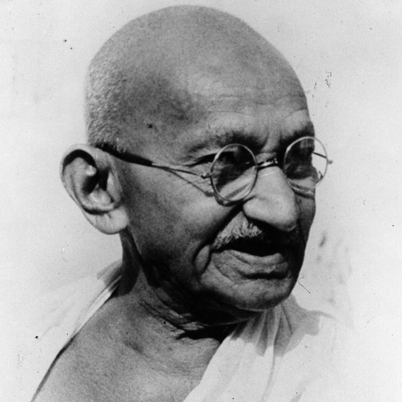
One part of Mr Hand’s speech that was particularly meaningful for me in this time of uncertainty in Egypt was the description of the spirit of liberty as “not freedom to do as one likes. That is the denial of liberty, and leads straight to its overthrow.” Nothing looks more like a denial of liberty than a leader who wins a democratic election and, upon taking office, thinks he has been given the right to do whatever he wants and then, on top of that, is insincere about opening dialog with his opponents. The religious figure to whom Mr Hand referred is said to have sacrificed his life for people whose opinions and worldviews were very different from his own. Gandhi himself described Jesus’ sacrifice as the “perfect” act. Muslims know about Jesus, although they doubt certain elements of his story.