


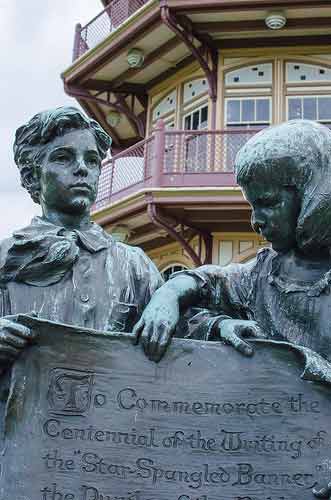
Patterson Park (Photo: Katie Yaeger Rotramel/mixedeyes via Flickr)
The armed robbery on Jan 28 of a 12-year-old girl near one of Baltimore’s most famous parks, combined with home break-ins, murders, stabbings, and other violent crime, has left people in an affluent neighborhood of the city and elsewhere, including children, questioning the mayor’s competence, we read on a blog post that has received hundreds of thousands of hits and been reposted on Facebook thousands of times.
As the 12-year-old was walking to her school—Patterson Park Public Charter School—at about 7:30 AM, she was approached by a man wearing a ski mask who showed a handgun. He demanded she give him her cellphone, which she did, and then he fled the scene, without injuring the girl physically. Emotional wounds, however, can take a long time for people to notice and a longer time to heal. The report comes from the Baltimore Sun, here.
In another violent crime, an editor at the Sun was brutally attacked as he walked from his car to his residence just two weeks before the attack on the girl. Jon Fogg’s skull was fractured in six places in the attack, which resulted in the theft of his credit card and subsequent fraudulent purchases.
This could very easily have happened to the girl: same motive of theft, same general area, same disregard for life of fellow human beings, same ignorance of the consequences, same city with a terrible record on crime.
Mayor Stephanie Rawlings-Blake has argued that every single citizen is either part of the solution or part of the problem. The popular blog Baltimore Brew quoted her:
I certainly hear the frustration. … If a crime happens in an area where property taxes are higher, we’re supposed to care more? That’s a debate that can happen on Twitter. I’m focused like [a] responder to action and finding partners who will do more than write a check to their property taxes.
This isn’t about playing the blame game or giving excuses. It’s about what are you going to do? If you’re not going to be part of the solution, that’s fine. But then acknowledge it: you’re part of the problem, because we need everyone to be engaged in their own way in helping us reduce violence.
Violent crime, of course, is not restricted to Baltimore. The recent surge near Patterson Park in southeast Baltimore is reminiscent of a surge in cellphone thefts last fall near Towson University. Violent consequences for the victims were often a part of those robberies.
Editorial
Why people hurt each other is a complete mystery to me, and I’m sorry I can’t join Batimore’s mayor in being a part of the solution. Just as she doesn’t have time to talk about protecting residents of the city, I don’t have time to patrol the streets or do much more than pay my taxes. I don’t mean to turn the mayor’s own words against her, but when she says it’s not about “blaming” and then turns around and blames the city’s residents, it doesn’t make kids feel protected or safe.
After all, does she mean the kids are part of the problem? What’s some 12-year-old girl supposed to do? Look, all the girl does is walk to school, walk home, and spend the rest of her time in the care and supervision of adults in the school and in her home. Maybe she spends some time playing with friends, kickball in the street—maybe, but I have my doubts.
This is an example of a real person who is victimized by crime, not a statistic in some citywide plan to complain about limited resources and the need for citizens to get involved. They are involved. But citizens have their own lives, most of which they live in fear. Schoolkids, for instance, have to learn math, science, social studies, English, music, physical fitness, and so forth. They can’t be out there patrolling the streets. Because safety comes first in kids’ minds, education in terms of school subjects, empathy, and citizenship will be utterly ineffective if kids live in fear of being attacked, and the problem of people hurting others will continue into the next generation.
Patterson Park is one of the city’s most treasured destinations, not only for its beauty but also for its historical significance. According to a Wikipedia entry, “The high ground at the northwest corner of Patterson Park, called Hampstead Hill, was the key defensive position for US forces against British ground forces in the Battle of Baltimore during the War of 1812. The redoubt was known as Rodgers Bastion, or Sheppard’s Bastion, and was the centerpiece of the earthen line dug to defend the eastern approach to Baltimore, from the outer harbor in Canton north to Belair Road.”
As the professional woman wonders in her blog entry how she can enjoy the wonders of Baltimore with the violent crime “elephant in the room,” I wonder how kids can have fun learning in Baltimore’s schools in that reality. There have been plenty of studies about curbing crime in urban areas (see here, here, here, and here). The question is: How can we stop violent crime against children in Baltimore?