

Scientists at the University of Maryland said this morning that the Chesapeake Bay’s health remained steady overall last year, despite heavy rains that normally flush pollution into its waters, the Baltimore Sun reports. Declines in Eastern Shore rivers, however, indicated problems with polluted farm runoff there.

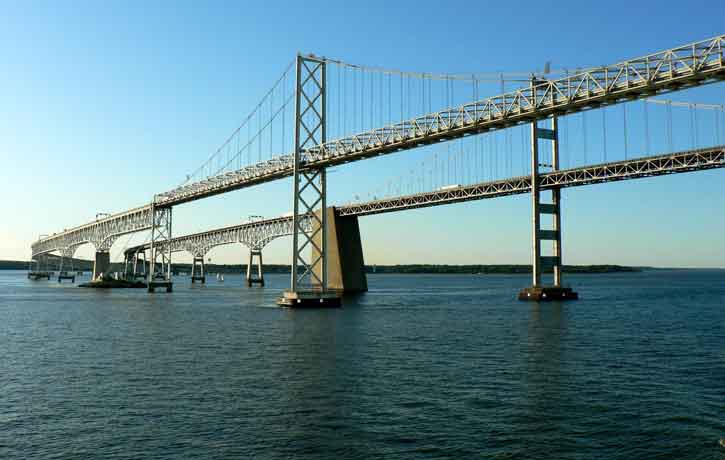
Chesapeake Bay Bridge, Sept 20, 2009 (Gary Hymes via Flickr)
Some of the rivers flowing into the bay improved while others got worse, according to the annual report by the university’s Center for Environmental Science.
Researchers attributed the stagnant condition of overall bay health to pollution flowing into the bay, primarily from fertilizer runoff and chicken manure. “All those Eastern Shore tributaries are showing we’re not going in the right direction,” the Sun quoted William Dennison, a vice president with the environmental science center, as saying.
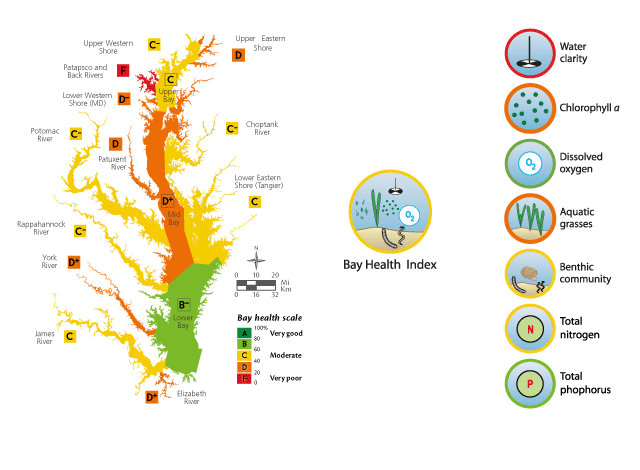
A report card posted in connection with the study rates 15 reporting regions of the bay using seven indicators that are combined into a single overarching index of health. In 2013, three fisheries indicators were also assessed. This website enables exploration of the report card via the 15 regions, by the indicators and indices, and as an overview of 2013 bay health.
On the bright side, key fish populations, including blue crabs and striped bass, have improved. Also, despite earlier reports that the blue crab population had slumped, Maryland scientists say they’ve “got a handle” on sustaining their numbers, the Sun quoted Mr Dennison as saying.
Says Mike Wilberg from the Chesapeake Biological Lab at UMCES:
Regulations [from the Magnuson–Stevens Fishery Conservation and Management Act] change the way humans interact with the system. … There’s a lot of people who are unhappy right now with how strict the catch limits are for some of their favorite species. So they’re lobbying Congress to change the act. … In a couple of years [2016], the Magnuson-Stevens Act is going to undergo its next reauthorization [initial oversight hearing], and the whole management system might shift.
The Magnuson-Stevens Act is largely credited with rebounding commercial fishing populations and repairing damaged marine ecosystems. This, in turn, has helped create jobs and support coastal economies.
Pollution in the bay, which doesn’t only come from Maryland and Virginia, destroys these ecosystems and costs jobs for fishermen. However, if temporary limits are ineffective in restoring key populations and safeguarding the estuary ecosystem, the loss of jobs and damage to local economies might be permanent.