


Should we tip waiters and waitresses or has the practice of tipping become a way to promote discrimination, sexual harassment, and other abuse? the New York Times asks students on a Learning Network blog entry.


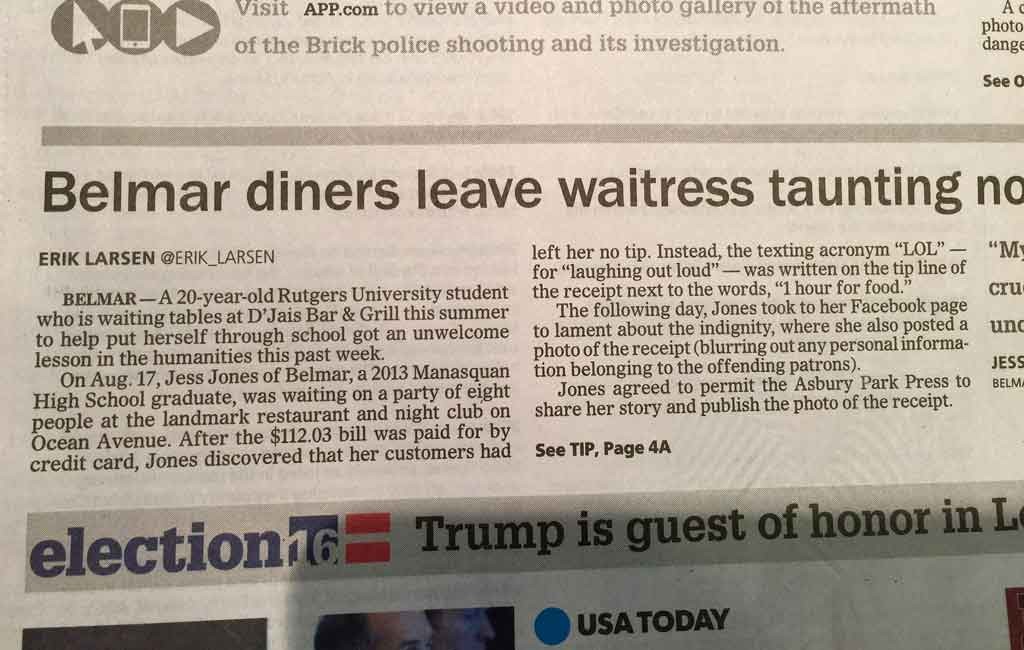
MANASQUAN, N.J. (Aug 25) — Ignore the comment about the “humanities.” (Lal Beral / Flickr Creative Commons)
As shown in the article excerpt from New Jersey, college students often rely on tips to put themselves through school or help them pay for college or living expenses while they’re in school. But:
- Women (waitresses) get higher tips than men (waiters)
- White women get more tips than black women
- Waitresses endure sexual harassment from bosses & customers because they need the tips
If we were to eliminate tipping—and pay servers a living wage—we would make a dent in eliminating the inequity that exists between servers, kitchen staff, and other “behind the scenes” workers, who make much less money, as a general rule, than servers.
For the record, the federal minimum wage for tipped workers is $2.13 per hour, but several states, municipalities, or restaurant owners set a much higher minimum wage for servers.
I encourage students older than 13 to enter comments on the Learning Network’s blog, here. Please be sure to read all the rules before you do so, especially the one that requires you to provide only your first name, and see Common Core high school writing standard RH.11-12.7 for more information.
On a personal note, I have no idea how people feel about this issue or the possibility of introducing a radical change like this into the restaurant business. It is, however, no more radical than some of the changes the corporate world has demanded in schools. Their justification—that they know how to run schools because they once went to school—is no more compelling than that of people suggesting a change to the practice of tipping: they have, once or twice, eaten at a restaurant, probably more recently than corporate executives have sat in the classroom of a neighborhood school serving low-income students. Maybe we should experiment with it.