


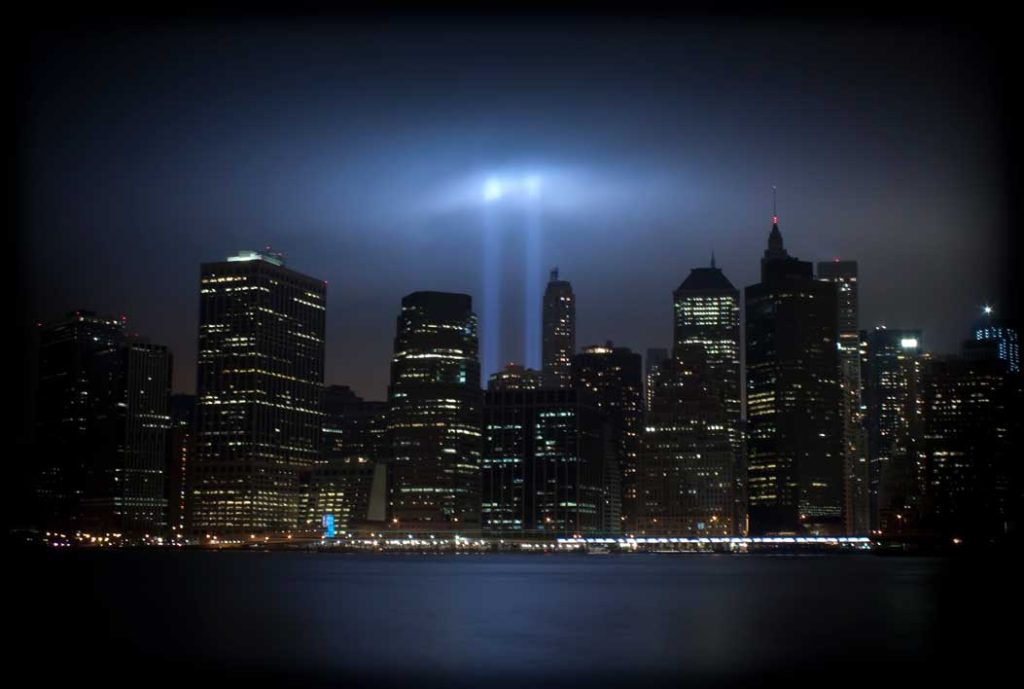
For today’s students, September 11, 2001, is history, not memory. None of them were alive when planes struck the World Trade Center, the Pentagon, and a Pennsylvania field. Yet every September, they join the generations before them in remembering the tragedy that changed America.


At Wentzville Liberty High School in Missouri, Delainey Gastreich describes freedom as “like the fireworks on the Fourth of July … synonymous with the fundamentals that America has been built on.” But she also recognized that 9/11 dimmed that light.
Writing in the school’s student newspaper, she reminds us that nearly 3,000 people died in New York City, 184 at the Pentagon, and 40 in Pennsylvania when passengers fought back against hijackers. “That is why we will never forget,” her article concludes.
Because their classmates weren’t alive on that day, students at Floyd Central High School in Floyds Knobs, Indiana, chose a different approach: student journalist Liam Violette asked teachers who were in classrooms on 9/11 to share their experiences.
One teacher recalled how disbelief gave way to horror as events unfolded:
“At first you’re like, is it real? Is it an accident? Nobody really knew what was going on. But then when the second plane hit … you could just tell there was something more to it.”
Another teacher remembered the principal’s urgent announcement:
“The principal came on the intercom and said, ‘Teachers, you need to turn on your TV.’ We were actually watching when the second plane hit the second tower.”
For students today, those memories — classrooms suddenly filled with breaking news, teachers and teenagers sharing shock in real time — make the history more tangible. A moment that can feel distant becomes easier to imagine when it’s described in the familiar setting of a school day.
One teacher admitted that, at first, even reporters’ comparisons seemed overblown:
“I remember hearing the phrase, ‘This is as bad as Pearl Harbor.’ I thought the announcer was just trying to sensationalize. But afterward, I realized — he was right. America was under attack, and a lot of great people died.”
Another recalled the eerie silence once the skies were cleared of airplanes:
“Driving home, it was very quiet, very few people on the road. I think people were in a state of disbelief — us, the United States, under attack.”
For today’s high school students, hearing these voices from their own teachers bridges the gap between history and lived experience. It lets them see themselves — sitting in a classroom, watching events unfold on a TV — through the eyes of those who were actually there.
And in doing so, they join in the promise echoed in classrooms, newsrooms, and memorials alike: never forget.