


We congratulate Glenbrook South High School — and District 225 — in north suburban Glenview, Illinois, on being named a Green Ribbon School by the Illinois Green Alliance.

The honor, spotlighted in reporting by Kami Shames in the school’s student newspaper, makes District 225 the sole Illinois district recognized this year by the alliance, in partnership with the Illinois State Board of Education and the Illinois Board of Higher Education.
Evaluated across pillars of environmental impact, community health, and sustainability education, the district stood out for initiatives ranging from cost-free campus health centers to advanced utility management. As Superintendent RJ Gravel noted, the achievement has already prompted inquiries from roughly 15 peer districts eager to replicate Glenbrook’s model.
“I was excited; I was very proud of us,” Kami quoted the school’s principal, Barbara Georges, as saying. “We do a lot of new and creative things that other people don’t try, and it was really nice to see the state recognize that and honor us for it.”
Central to that success is an innovative Energy Storage System (ESS) that offers a compelling blueprint for school systems seeking both fiscal returns and grid resilience. Two systems are already installed at Glenbrook North, and this adds a third system to the district’s campuses.
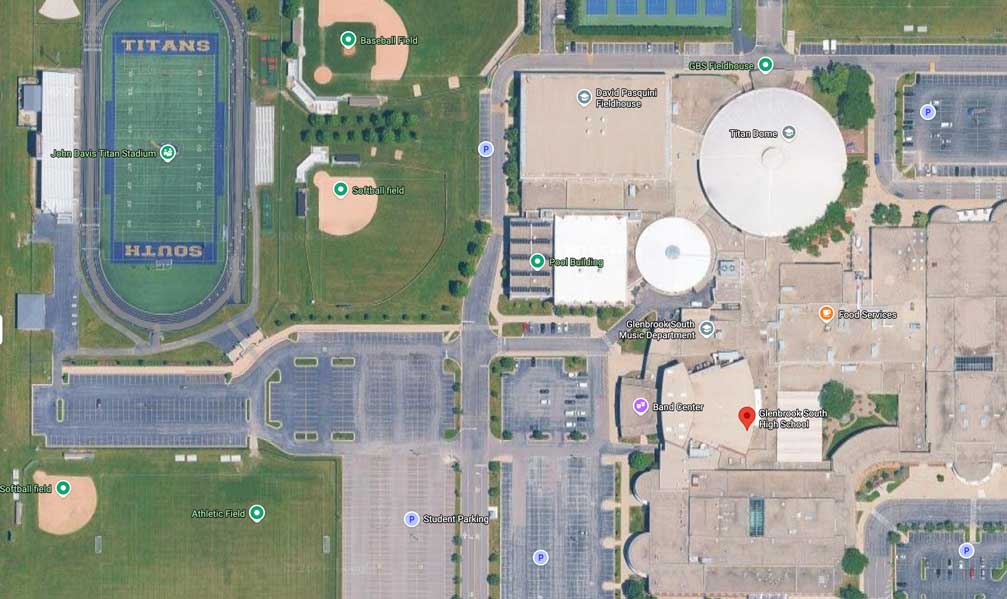
At Glenbrook South, a 190 kW rooftop solar array operates alongside a utility-scale Tesla Megapack 2XL battery system to deliver 979 kW / 3,916 kWh of capacity. Installed by Convergence Energy under a district-wide Guaranteed Energy Savings Project, the setup effectively transforms the high school into a community micropower plant. Automated software draws and stores power from ComEd during off-peak hours then discharges electricity back to the grid during periods of peak regional demand.
Beyond stabilizing the local power supply across Glenview, Northbrook, and Northfield Township, the installation yields substantial operational dividends. District leadership reports that each battery unit generates approximately $250,000 annually in revenue.
Just as importantly, the platform doubles as an active academic laboratory: live performance metrics and load-shifting data feed directly into district curricula covering environmental science, engineering, and economics, demonstrating how modern public school infrastructure can pay for itself while preparing students for the clean-energy workforce.