


President Donald Trump signed an executive order Monday directing the Justice Department to investigate and prosecute cases of American flag burning. The order calls for up to one year in jail for those convicted and also instructs Attorney General Pam Bondi to pursue litigation that could bring the issue back before the Supreme Court, the Associated Press reports.

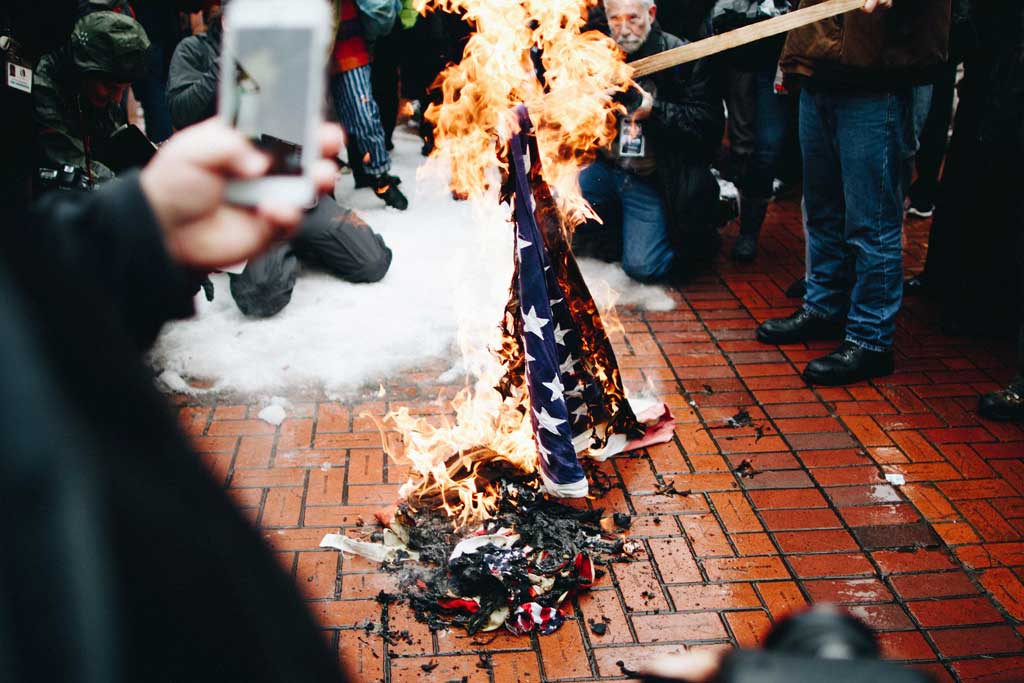
The action comes despite a 1989 Supreme Court decision in Texas v Johnson, which ruled 5–4 that flag burning in protest is protected as free expression under the First Amendment. That ruling, however, left room for prosecution if the act is intended to incite “imminent lawless action” or amounts to “fighting words.”
Administration officials say they will enforce the executive order in a manner that does not violate constitutional protections, with Bondi pledging to prioritize cases involving threats to public safety. The order also includes provisions for immigration consequences for foreign nationals found guilty of burning the flag.
Legal experts and civil liberties advocates have raised questions about the order’s legality, noting that the First Amendment prevents the government from prosecuting expressive activity simply because it is offensive. They point out that even Justice Antonin Scalia, a conservative often praised by Trump, sided with the majority in the 1989 case protecting the act as speech.
The order reflects Trump’s longstanding position that flag burning should carry penalties, a stance he has repeated since his 2016 election. Whether the new directive leads to prosecutions or a new test case before the Supreme Court remains to be seen.
Writing Prompts for this Article
Free Speech and Offense: Should the government be able to restrict speech or protest activities simply because they are offensive to many people? Why or why not?
Symbol vs Action: The American flag is a powerful national symbol. Do you think symbolic acts like flag burning should be treated differently than spoken or written words?
The Role of the Courts: Why do you think the Supreme Court decided to protect flag burning in *Texas v. Johnson*? Do you agree with the decision?
Public Safety vs Free Expression: How should the government balance protecting public safety with protecting individual rights to protest? Can you think of examples where this balance might be difficult?
Changing the Law: If today’s Supreme Court revisited the flag burning issue, do you think they would rule the same way? What factors might influence a different outcome?