


Sophia Groundwater wonders in the student newspaper at Orchard Park High School in New York why some athletic events begin with the playing or singing of the national anthem while others don’t:
Her words touch on a debate that stretches well beyond Orchard Park.
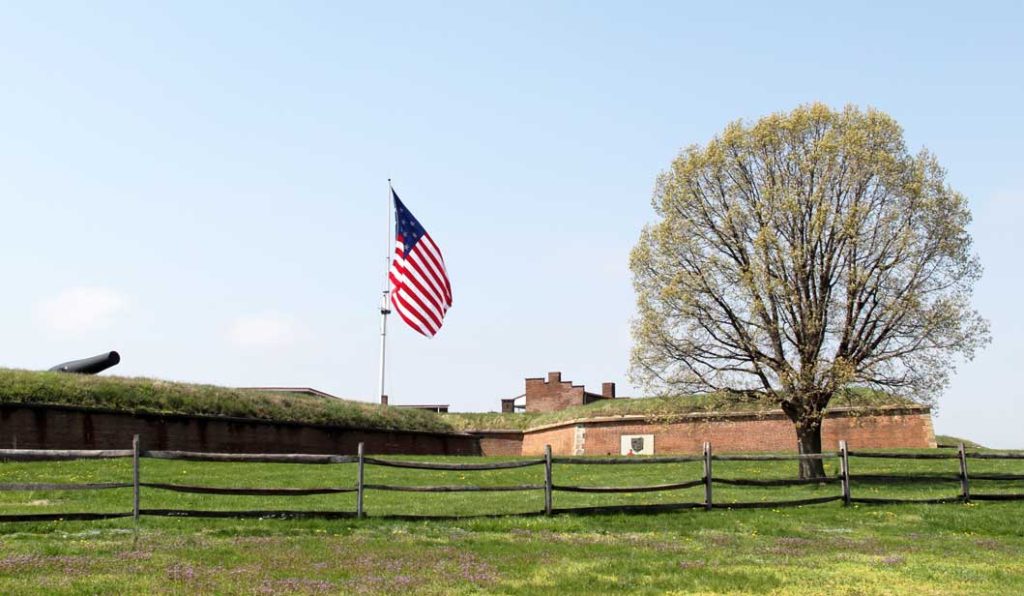
Francis Scott Key wrote the words to the “Star-Spangled Banner” in September 1814 after witnessing the British bombardment of Fort McHenry during the War of 1812. Seeing the American flag still flying after the night of battle inspired his poem, originally titled “Defence of Fort M’Henry.”


The poem was soon set to the tune of an old English drinking song, “To Anacreon in Heaven,” and quickly gained popularity as a patriotic ballad. It was played at political gatherings, public ceremonies, and eventually at baseball games, where it became associated with moments of national pride.
Congress officially designated the Star-Spangled Banner as the national anthem in 1931, more than a century after Key wrote the lyrics. Since then, it has been performed at numerous civic and sporting events, serving as a powerful reminder of resilience, sacrifice, and unity in the face of challenge.
It began to be sung at baseball games during World War I. Its use became more consistent during World War II, evolving into a ritual of respect, unity, and patriotism before major sporting events. Students at OPHS and other schools across the country connect to this tradition when they pause, stand, and reflect before the game begins.
One student in the varsity mixed choir at Emerson High School in Frisco, Texas, said she was excited to be singing the Star-Spangled Banner for the varsity football team’s home opener. “The national anthem has a way of unifying communities, entire schools and choir classes alike,” wrote Olivia Northcutt in the school’s student newspaper.
Nearly 100 years after Congress adopted it as our national anthem, it remains a powerful, if sometimes debated, tradition in sports, linking sports fields from New York to Texas, from Maine to California, to a larger national conversation.