


But regions are changing that.
When foreign exchange student Anna Ventura told Briana Flores for the student newspaper at Notre Dame Academy in Green Bay, Wisconsin, that her Italian school day used to end around 1 or 2 pm, with sports and clubs happening later and largely outside school, she was describing a common Italian pattern. Exchange-program guidance for host schools in Italy explicitly notes that many high schools don’t run after-school activities like sports or drama. Students typically find those through community organizations instead.
Anna described Wisconsinites as “welcoming and always available, kind and, most of all, really helpful” and recommended to anyone contemplating a trip to Italy to visit more than one location: “Italy is beautiful and unique in its own way, with cities and landscapes very different from each other. I’d try to visit as much as possible.”
That same sense of variety extends to Italian schools. Just as no two cities look alike, no two regions run extracurriculars in quite the same way. Under Italy’s system of school autonomy, each region — and often each school — shapes its own “offerta formativa” (educational offer). Some limit the day strictly to academics, while others build partnerships with municipalities, cultural centers, or sports federations to keep schools open in the afternoon.


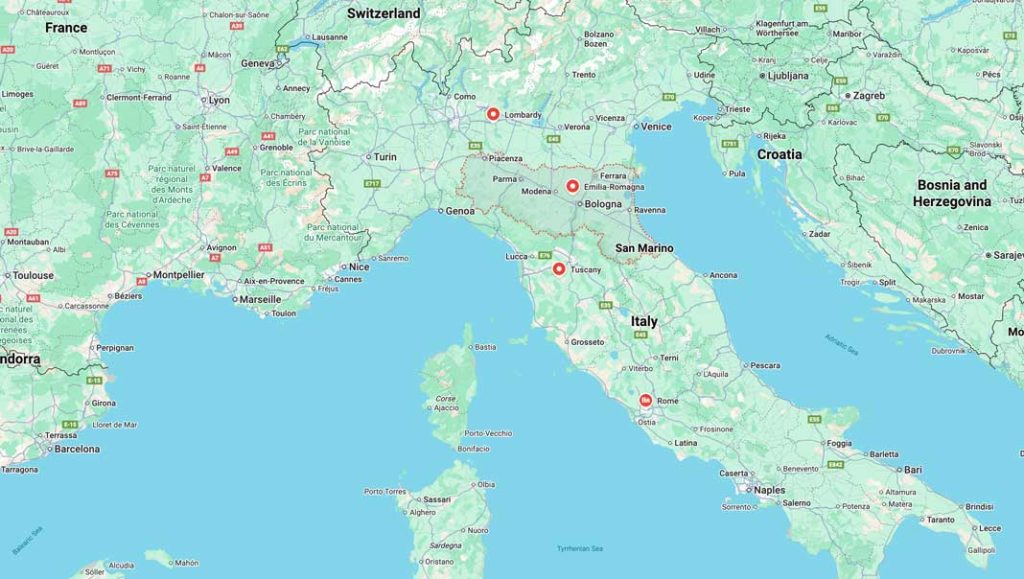
That autonomy produces real regional differences. Emilia-Romagna launched “Scuole aperte” in July 2025, a €4.5 million pilot to keep lower-secondary schools open in the afternoons as community hubs and funding orientation services, anti-dropout supports, and extra-scholastic activities. Municipal partners are now rolling out local projects under the same banner.
Regional governments periodically announce competitions for funding, known as “calls” (bando in Italian), and schools and their partners win these competitions, get the funds, and expand their extracurricular offerings.
In Lazio, Rome’s city government runs a biennial program — “Scuole aperte il pomeriggio, la sera e nei weekend” — to co-fund schools that open beyond regular hours for labs, arts, and sports. The 2025–2027 call targets afternoon, evening, and weekend activities. Recent results show that more than 160 Roman schools are participating, roughly half of the city’s total.
Tuscany pairs after-hours labs with targeted sports initiatives. A 2025 regional call funds school-based laboratories to counter disengagement, while “Scuola Attiva Kids—Toscana inclusiva” adds a Tutor Sportivo Scolastico into primary schools for structured motor activities, co-financed with European Union Social Fund resources and coordinated with the national Sport e Salute program.
Even Lombardy — often relying on community clubs for sports — has multiple channels that indirectly expand school-age activities: regional contributions to sports events and projects, plus the national Scuola Attiva tracks (Kids/Junior) delivered locally through the regional school office.
The net effect across regions is that extracurriculars are increasingly accessible on campus or nearby, but still organized through a patchwork of regional calls, municipal programs, and school-community partnerships, rather than a single nationwide co-curricular model.