


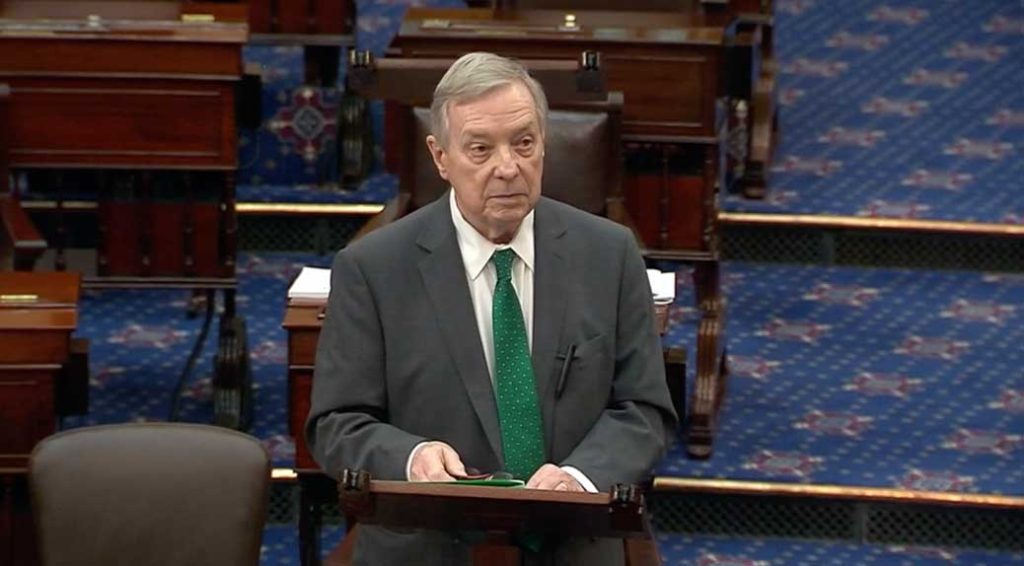
During Tuesday’s Senate Judiciary Committee hearing, Senate Democratic Whip Dick Durbin of Illinois clashed with Senator John Cornyn, Republican of Texas, over the proposed SAVE America Act.
The exchange centered on the bill’s requirement for documentary proof of citizenship (DPOC) to register for federal elections. Durbin argued that the bill, while framed as an election security measure, would create insurmountable hurdles for millions of eligible American citizens who lack specific, “readily available” documents.

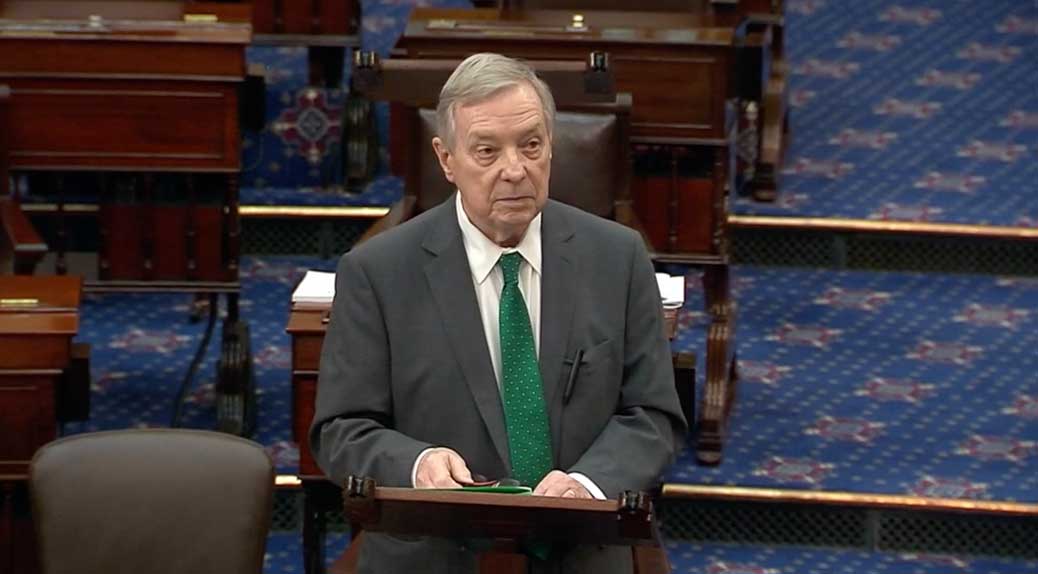
He took his point to the Senate chamber later that day, which is on C-SPAN in the 10:47:46 AM segment at about the 52-minute mark.
Mr Durbin highlighted a critical gap in documentation, noting that roughly 50% of Americans do not currently possess a valid US passport. Under the SAVE Act, individuals without a passport would likely need to present a birth certificate and a government-issued photo ID.
He pointed out, however, that for many, even these documents are insufficient or difficult to obtain, potentially locking millions out of the democratic process. The act would be particularly harmful for seniors and low-income citizens, he said.
A significant portion of the senator’s concern focused on the impact the bill would have on married women. Mr Durbin explained that tens of millions of women who changed their last names upon marriage would face a “documentation nightmare.” Because the name on their birth certificate does not match their current legal name or photo ID, these voters would be forced to navigate a costly, time-consuming process to obtain marriage licenses or amended certificates to prove their identity and citizenship.
In response to the push for the bill, underscored by President Donald Trump in his State of the Union address, Mr Durbin cited data from the Heritage Foundation, noting that only 24 cases of non-citizens voting were documented over a 20-year period. He characterized the SAVE Act as a “solution in search of a problem” that risks disenfranchising legitimate voters to address a statistically rare occurrence.
As the debate continues, the bill remains a central flashpoint in the broader national conversation over voter access versus election integrity.