


In Iowa, the legislative debate surrounding House Study Bill 636, which would prevent schools from signing contracts with public libraries that give students permission to check out books with their student IDs, has sparked a national conversation about the delicate balance between parental control and the fundamental right to access information.

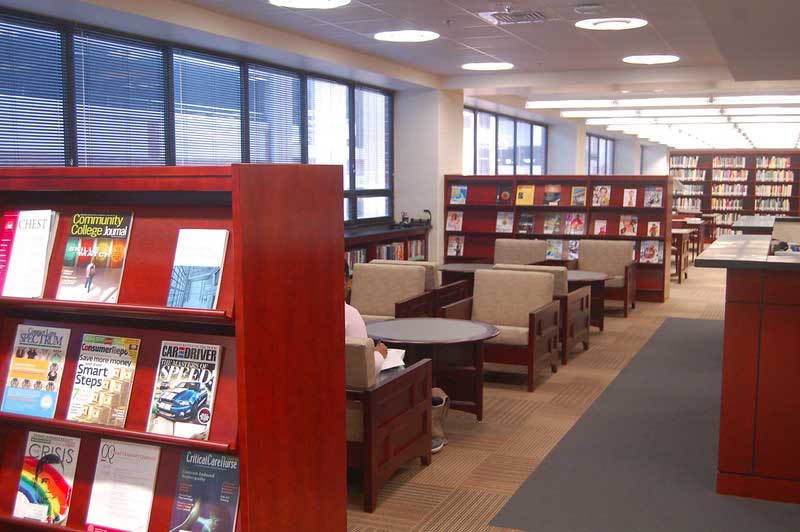
While proponents of the bill argue that restricting school-library partnerships is necessary to shield children from “counseling-worthy” content — LGBTQ+ books, for example — students and educators across the country are sounding an alarm: by severing these ties, we aren’t just removing books; we’re dismantling the infrastructure of literacy and empathy.
A Grave Injustice
For many Iowa students, the local public library or a traveling “bookmobile” isn’t a luxury but their only library, especially in schools that don’t have a media center.
Librarian Carissa McDonald at Pleasant Valley High School in Bettendorf points out that rural and under-resourced districts often lack the funding for robust in-house media centers and would be disproportionately harmed by this legislation, reports Veda Gisi in the student newspaper.
As a result, banning these agreements would effectively create “literacy deserts.” Books provide a safe space for “escape and self-discovery,” Ms McDonald argues, and that safe space is essential in an increasingly stressful world.
Legislative Movement
The bill was renumbered to House File 2324 after passing the House Education Committee on February 4 and placed on the House calendar on February 6. Despite Representative Skyler Boden’s commitment to resolve the “shared services” issues for schools without libraries, the current text remains identical to the original draft, keeping the strict ban on school-library agreements and bookmobile access.
While the legislative clock in Des Moines remains paused on this issue, the debate has illuminated a profound divide in how we define “child safety.” On one side, the legislative focus is on content control — the idea that some books are inherently harmful to a child’s mental health. On the other hand, educators and students argue that the real danger is the disconnection that comes from the loss of the community networks that make literacy possible.
For Rep Boden, the bill is a shield intended to prevent children from accessing literature that might require “counseling for the rest of their lives.” However, as Veda points out, this shield acts as a barrier for districts like Des Moines Public Schools, which lack in-house libraries. When a state severs the connection between a student’s ID and the local public library, it doesn’t just block “controversial” books; it blocks access to:
- Academic Research: Digital databases and encyclopedias
- Economic Mobility: Free internet and literacy tutoring
- Physical Access: The “bookmobiles” that bring stories to rural doorsteps
The Power of “Windows, Mirrors, and Sliding Glass Doors”
Librarians at Lincoln-Sudbury High School in Massachusetts cite the work of Dr Rudine Sims Bishop to explain why diversity in a public library’s catalog is a feature, not a bug. For a piece by Abigail Pielich in the student newspaper, librarians argue that reading is a powerful tool for mental health and social cohesion:
- By acting as “windows” into other lives and “mirrors” for one’s own identity, books foster compassion in a divided world.
- Removing books negates the “lived experiences” of real people, telling students that certain identities are not valid.
- Reading for just six minutes can reduce stress levels by 68%.
Closing the Gap Through Community Action
And while policy debates rage in statehouses, students at Oak Park and River Forest High School in in Oak Park, Illinois, are proving that the solution to declining literacy scores often starts at the ground level, reports Gigi Stevens in the student newspaper there.
“Once Upon a Reader is a school club at OPRF where we utilize the buddy system,” Gigi quoted Marley Paxton, one of the juniors who founded the club, as saying. “An older kid is paired with a younger kid, and they read together. The older kid asks questions and sees if the younger kid can interpret the reading.”
| Value Type | Key Contribution to the Community | Source & Insight |
|---|---|---|
| Academic Foundation | Exposes children to advanced vocabulary and complex sentence structures necessary for higher education. | Angie Staber (Pleasant Valley): “Reading is the greatest tool to teach empathy.” |
| Mental Health | Acts as a therapeutic escape; reading for just six minutes can lower stress levels | Paula Myers (Lincoln-Sudbury): Uses reading as a “soothing” force against real-world pressure. |
| Equity & Access | Provides “Windows and Mirrors” so students from all backgrounds can see their own lives reflected and understand others. | Ellen Chu (Lincoln-Sudbury): Challenges to books “negate certain people’s lived experiences.” |
| Mentorship | High school “reading buddies” bridge the post-COVID literacy gap by making reading social rather than a chore. | Marley Paxton (OPRF): “Having a mentorship is really important for young kids.” |
While HF 2324 currently remains on the Iowa House calendar without the promised “shared services” protections, the stories from Illinois and Massachusetts provide a blueprint for a different path. As the debate shows, when the legal “buddy system” between schools and public libraries is threatened, it isn’t just a political disagreement; it’s a potential dismantling of the community support structures that sustain literacy.