


Prospect High School students in Mount Prospect, Illinois, received a hands-on lesson this week regarding the deceptive impact of vaping on adolescent health, reports Tessa Trylovich in the school’s student newspaper.

Representatives from OMNI For All (Illinois), a behavioral health organization that offers 24-hour crisis intervention, community outreach, and counseling, visited the school’s commons on March 16 to lead an interactive demonstration designed to visually represent lung damage. Prevention specialists Sarah Powills and Aleah Bautista guided roughly 70 participating students through a simple task: using a straw to transfer ping-pong balls from a tray to a cup.
The lesson crystallized during the second round: students were instructed to crumble their straws before attempting to move the ping-pong balls again.
“The second time it’s a lot harder,” Powills explained, “because there’s an impact on the straw, just like vaping has impacts on our lungs.”
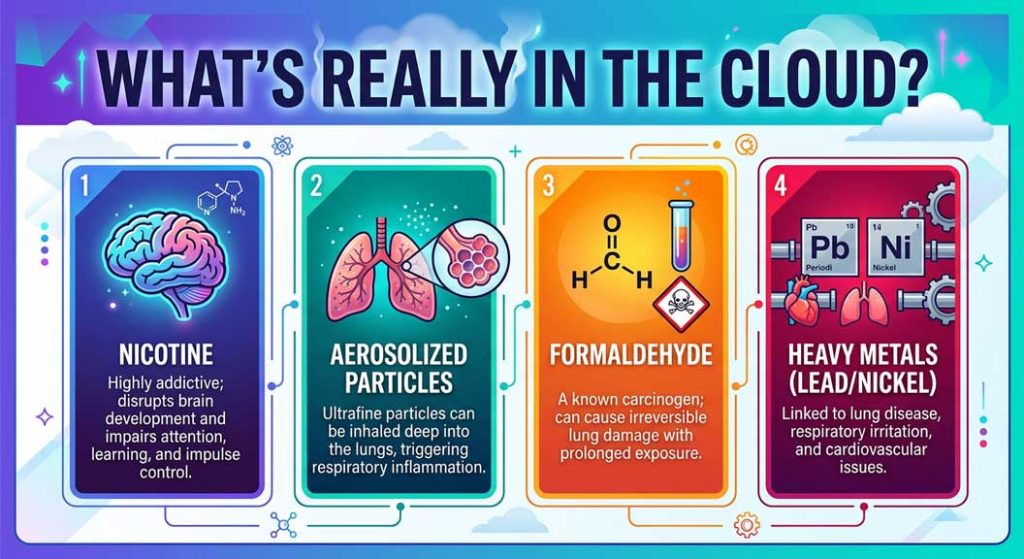
The demonstration provided a stark, hands-on metaphor for how restricted airflow — caused by exposure to the chemicals in the vape cloud — can make even simple breathing difficult.
While many students are aware of the “social effects” of vaping, OMNI taught them about the distinct chemical risks that are often downplayed in marketing. By focusing on the direct connection between the inhaled aerosol and lung function, the organization aims to encourage critical thinking before students experiment.
“We really want [students] to… educate [themselves] and think before [they] try anything,” Powills said, emphasizing the long-term perspective necessary for youth health.
OMNI remains a regular fixture at Prospect, visiting about once a month with rotating prevention activities. Looking ahead to April, they will return with a program focused on alcohol’s effects on the brain. Their spring schedule concludes in May, just before finals, with an “ice bucket” activity designed to teach students practical relaxation and stress management skills—providing a healthy alternative to the substances they work to prevent.
Protecting the Developing Brain (Ages 10-25)
The prefrontal cortex, responsible for judgment and decision-making, continues to develop until the mid-20s. Nicotine exposure during this window can physically alter the brain’s architecture, increasing the long-term risk of addiction to other substances later in life.