


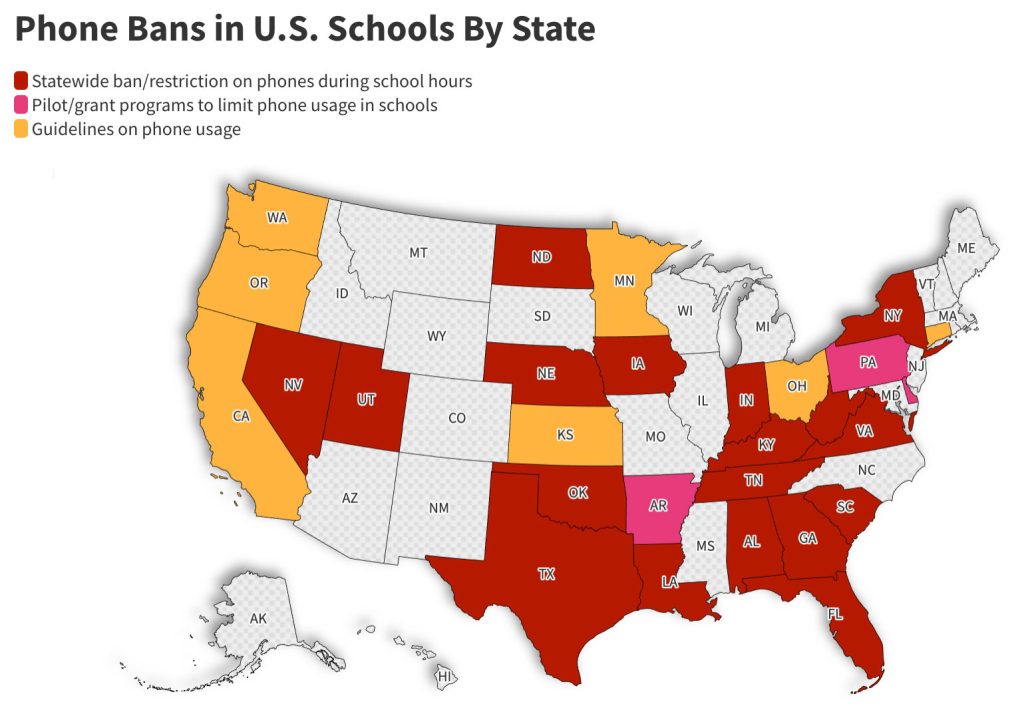
A number of states have banned the student use of smartphones and other communications devices during the school day on school grounds, Campus Safety reports.

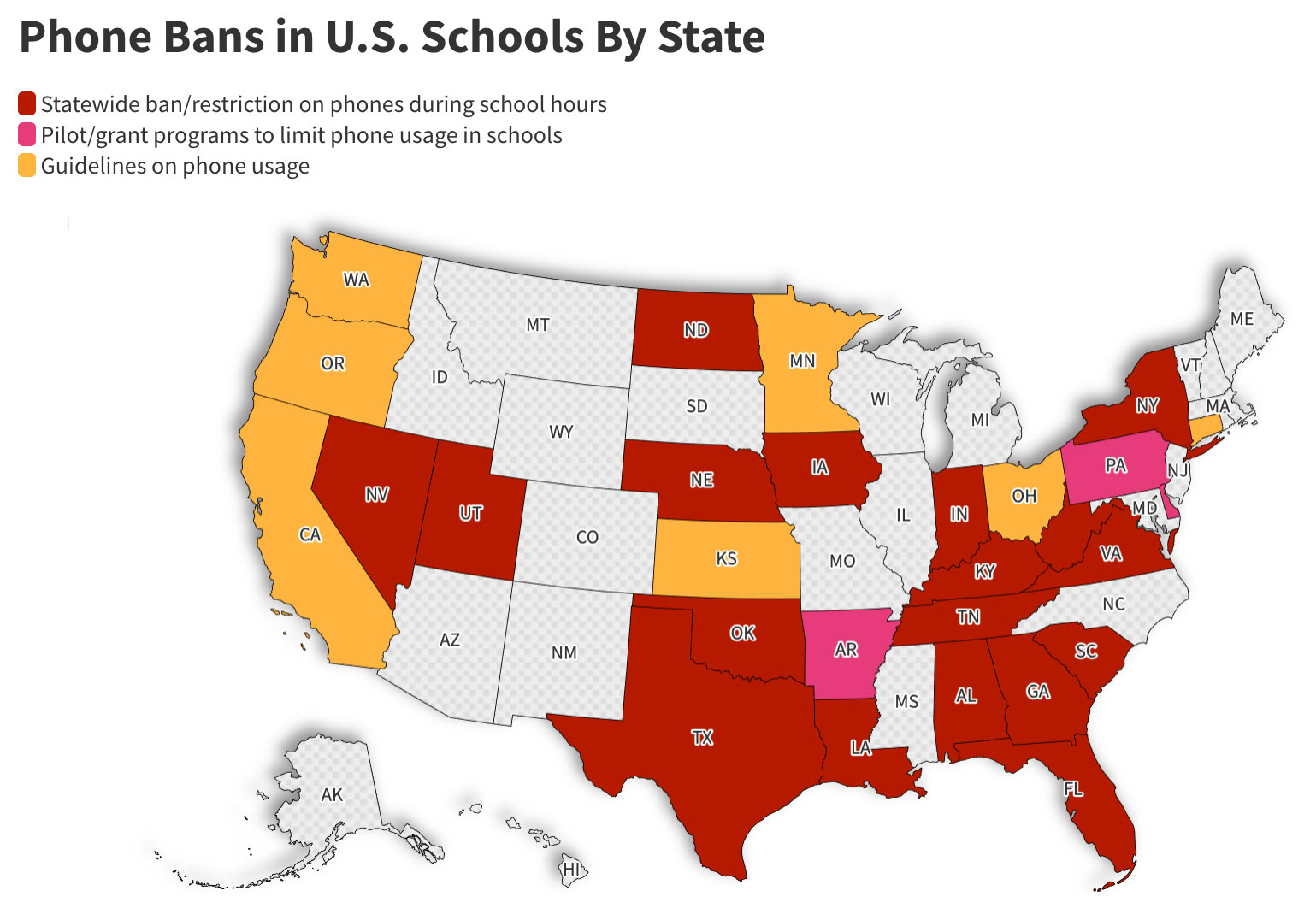
States in which students can’t use a communications device, including cellphones, smart watches, or smart glasses, include Alabama, Florida, Georgia, Indiana, Iowa, Kentucky, Louisiana, Missouri, Nebraska, Nevada, New York, North Dakota, Oklahoma, South Carolina, Tennessee, Texas, Utah, Virginia, and West Virginia.
Additionally, a few states actively encourage school districts to establish policies that ban the use of smartphones. These include Arkansas, Delaware, and Pennsylvania, each of which provides funding to schools that ban cellphones, enabling them to purchase pouches and other secure storage for the devices.
Finally, several states — California, Connecticut, Kansas, Minnesota, Ohio, Oregon, and Washington — have published official guidelines on phone usage during the school day.
At duPont Manual High School in Louisville, Kentucky, Stella Kolers, Navarre Wiese Baharestan, and Alex Hopkins link to the consequences school officials have set up for students who violate the personal communications device policy. But they also point out in the student newspaper at the school that there are rewards for students who follow it:
“Students with zero offenses will receive ‘prizes’ at three-week, six-week and full-semester intervals,” they write.
Survey data from the Pew Research Center showed that in mid-2024, 72 percent of high school teachers said phone distractions were a major problem in their classrooms.
Some opponents of the bans have argued that they could hinder students from contacting family members in an emergency. They believe that promoting healthier device usage could significantly help teach children how to manage their screen time.
However, teachers largely support the bans, which are now the law of the land in several states.