


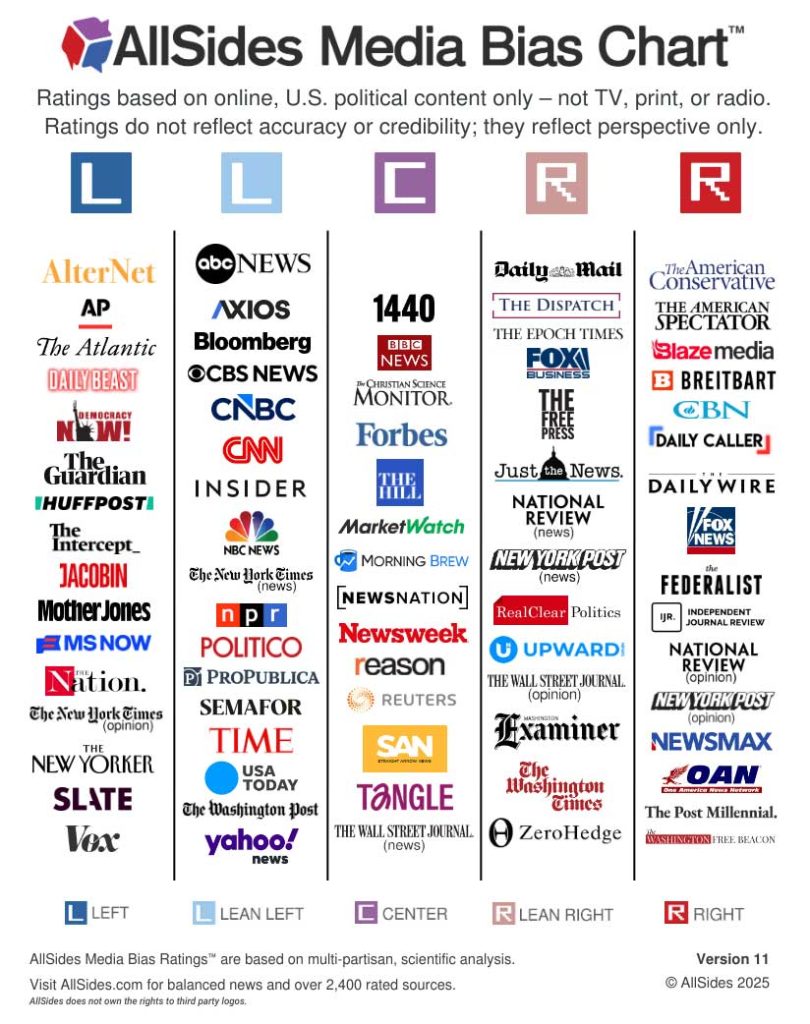
In an era of “viral” reactions and AI-generated content, students at Verrado High School in Buckley, Arizona, are advocating for a disciplined approach to media literacy, writes Maely Levie in the school’s student newspaper.
Maely points out that the speed of social media often bypasses our critical thinking, leading to a “forceful wave” of misinformation. To combat this, educators like AP Government teacher Erin Eisen suggest a “search-first” mentality: if a major story appears on a social platform but cannot be verified through a simple search of reputable news agencies, it is likely illegitimate.
While individual news consumers often have personal perceptions of media bias, several non-partisan organizations provide data-backed analysis to help students navigate these waters. Organizations like Ad Fontes Media and AllSides use rigorous methodologies to map news outlets by political leaning and factual reliability.

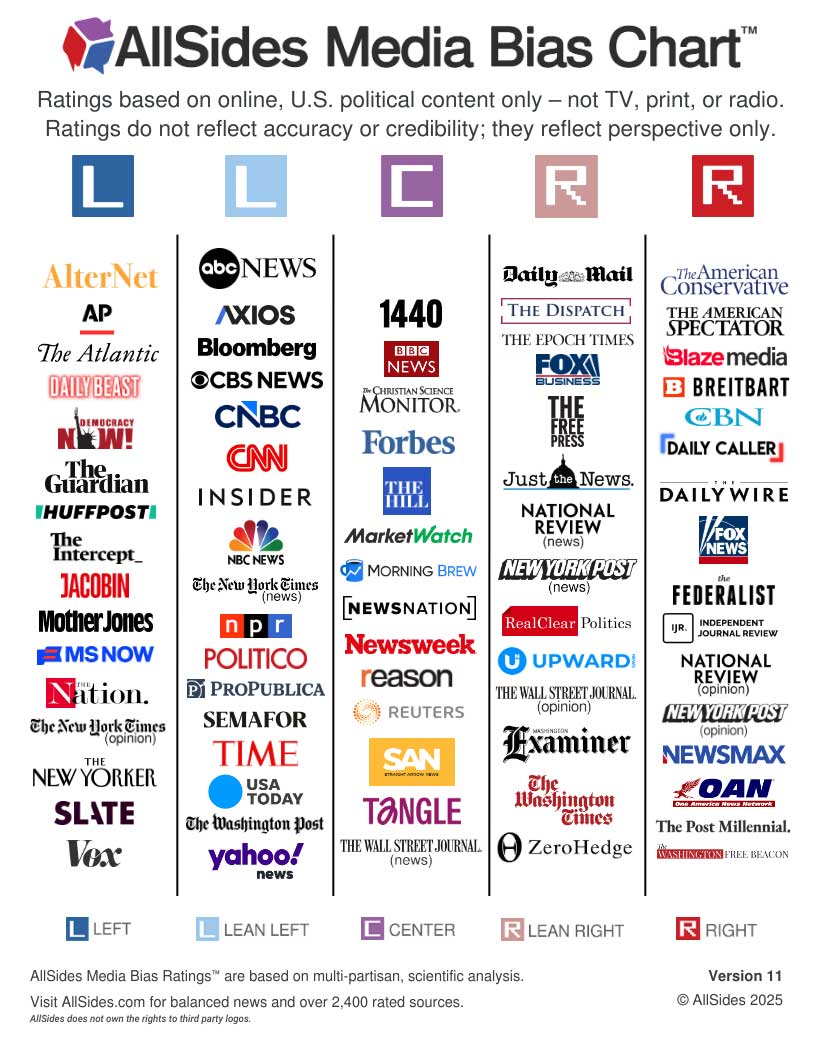
These tools allow students to move beyond “gut feelings” about a network and instead use a standardized “Media Bias Chart” to diversify their news diet and identify sources that prioritize straight reporting over commentary.
For many students, the challenge lies in the sheer volume of information “pushed in your face,” as senior Gabby Mowry describes it. The strategy at Verrado is to transition from being passive “scrollers” to active “fact-checkers.”
By reporting misinformation and taking a few extra seconds to verify a claim, the next generation of voters aims to build a more informed populace. The goal is to distinguish between social media as a tool for connection and professional journalism as a tool for information.
Other balanced news sources include Snopes and PolitiFact for fact-checking and verifying specific viral claims, quotes, or images, and AP News and Reuters for primary sourcing and Getting the “just the facts” version of a breaking event.