


Several schools in western Nevada, near the California line, including the Washoe County School District, which serves more than 63,000 students, and the smaller Calaveras Unified School District in California closed due to wildfires already this year.
“The safety and well-being of our students and staff is our highest priority,” ABC News quoted Superintendent Kassie Meeks of Calaveras, as saying. “Based on current air quality conditions, the ongoing impacts of wildfire smoke, and the potential for conditions to change rapidly as winds shift, we believe closing all schools is the safest course of action.”
Poor air quality from wildfires caused the Fort Worth Independent School District in north Texas to cancel all afterschool activities last week, reports Katie Mathews in the student newspaper at Rouse High School in Leander, Texas.

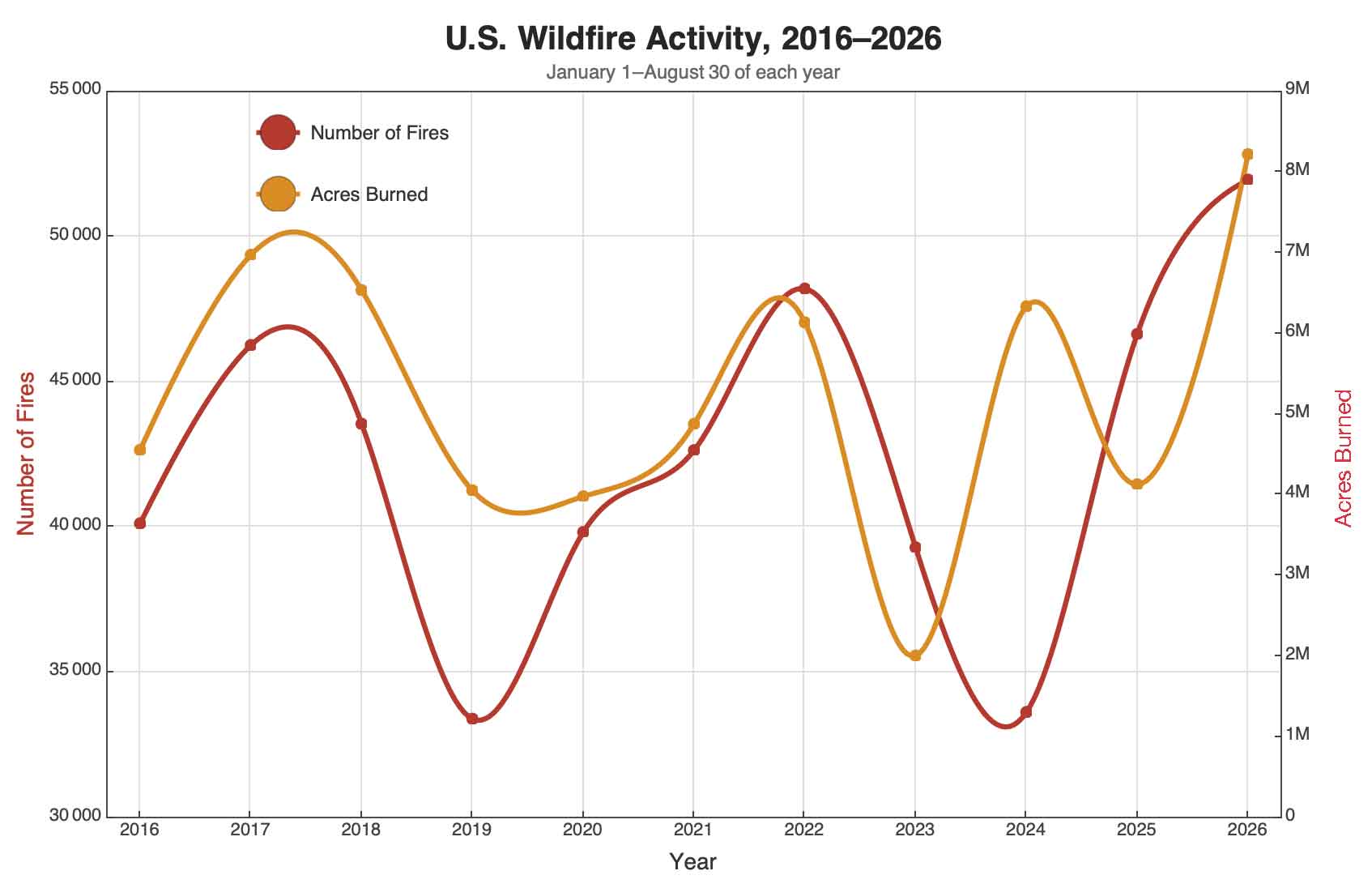
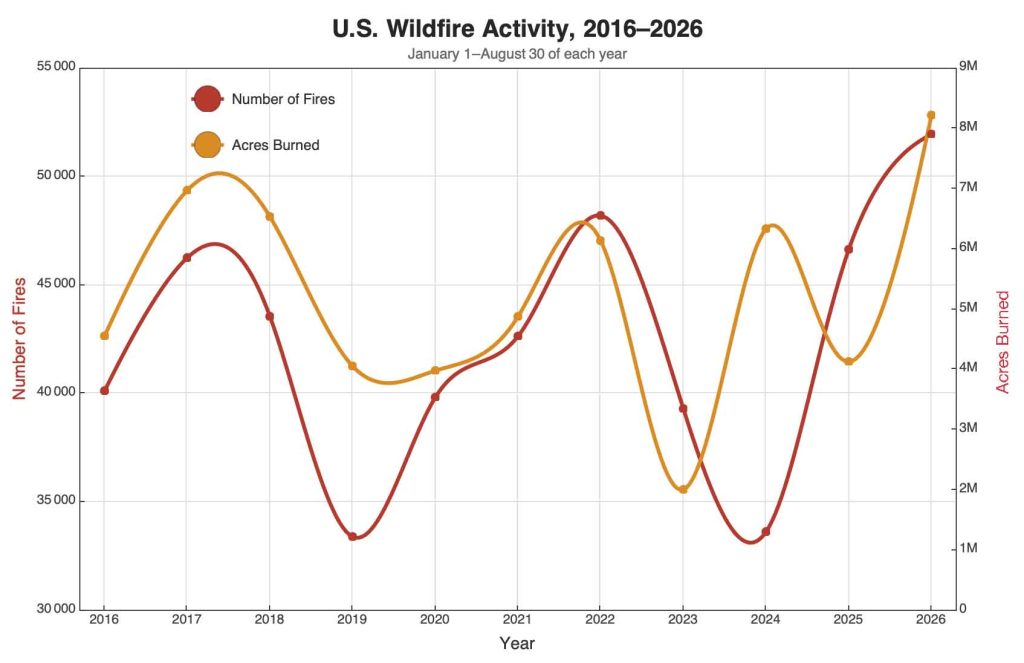
According to the National Interagency Fire Center, more than 51,000 fires have occurred this year between January 1 and August 30. From 2016 to 2026, US wildfire activity has varied considerably from year to year, but 2026 stands out with both the highest number of fires and the greatest acreage burned through August 30. The broader increase in wildfire risk and burned area is consistent with the effects of a warming climate, including hotter, drier conditions that make landscapes more conducive to large fires.
Wildfires Becoming More Widespread, Dangerous
In “Wildfires & Health,” the Center for Climate, Health, and the Global Environment reports that an estimated 7.4 million kids in the US are affected by wildfire smoke each year. In 2018, on just a single day, a million school children in California experienced school closures due to wildfires. A five-page guide from Americares provides some guidance to help people stay safe during wildfires.
“Burning fossil fuels like natural gas, oil, and coal releases greenhouse gases into the Earth’s atmosphere and raises temperatures. Heat dries wood and vegetation that fuel fires,” the center’s authors write. “Climate change also promotes drought conditions especially in places already prone to them. These factors together have led to more frequent, larger, and more intense wildfires as well as longer wildfire seasons.”