

We’ve read myriad reports in the media as well as the scientific literature telling us the melting of ice in the great ice sheets of the world has been contributing to a rise in sea level, but nobody could agree on just how much—until now.
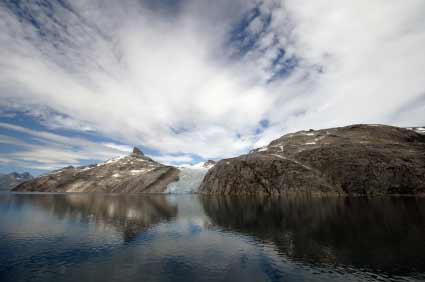
Photo: Prince William Sound, Greenland, Lisa Strachan/iStockPhoto
For the sake of counting, at least 29 different estimates have been published in the scientific literature alone, since 1998. The estimates ranged from 1.9 mm every year to -0.2 mm per year, the low estimate representing a negative contribution to a rise in sea level or what would mean water was being taken back into the ice sheets.
Now, 47 glaciologists have come to a consensus about all the data on what the past century’s warming has done to the great ice sheets: a current annual loss of 344 billion tons of glacial ice, accounting for about 20 percent of current sea level rise.
Now we can get some rest, and we thank Science for publishing the consensus report on page 1183 of Thursday’s edition. Several scientists worked together to tackle a common problem. The consensus is that the melting of ice sheets has contributed to an average sea-level rise since 1992 of 0.59 mm per year. Plus or minus 0.2 mm per year. And it was going so well. So much for resting!
Melting rate shown to be increasing
During the last 20 years, sea levels have definitely risen—by about 3.3 mm per year—encroaching on our beautiful shores, but most of that rise has been due to the expansion of liquid water as it became warmer. Warm water has a lower density than cold water, so as the oceans become warmer, the same number of water molecules would occupy more space.
However, the increase in the number of water molecules in liquid form has also contributed a little bit to the rise in sea level. We just didn’t know how much until this report. The ice sheet in Greenland contributes about 263 billion tons of water molecules, which is about what most people thought. On the other hand, Antarctica’s ice sheet melting estimate—about 81 billion tons of lost ice per year—was the first agreement on a rate for that ice sheet.
Now some bad news: The analysis shows that the rate of loss from Greenland and West Antarctica has been getting faster. Some ice sheets, it seems, are overly sensitive to warming.
Yes, scientists got together to agree on the numbers for these two great ice sheets. Nothing bad about a few scientists collaborating. But now we need to try to do something about it if we can.
