

It seems we just went through this, but the College Board has decided the SAT exam in its current instantiation isn’t working. So they say they’ll rewrite it. OK, fine.
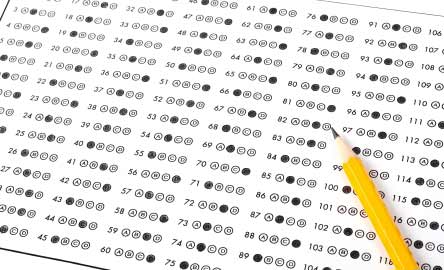
I use the word “instantiation” in the sense that the test and our widespread use of it simply provide one more piece of evidence to support the theory that a multiple-choice test can predict, to an extent that should be trusted, the chances a student has of succeeding in college. As evidence goes, it’s not that good, but the College Board is going to take another crack at it.
The SAT began as an aptitude test about 80 years ago, for use mainly by scholarship applicants. World War II got in the way, though, so the test became the de facto standard admissions test for all college applicants. It was administered to more than 30,000 high school students on a single day in 1948.
By “aptitude test,” I mean it measured something closer to raw intelligence than how hard students had worked in high school or how well they understood any particular subject matter. The most recent change, less than 10 years ago, eliminated the analogies and added a writing test. These modifications, it was hoped, changed the SAT’s character from an aptitude test to an achievement test that measured the knowledge students need to succeed in college. That’s not exactly what happened, but that was the theory.
It’s no secret that the ACT has become more popular than the SAT. Last year, more students took the ACT than the SAT for the first time in the history of the two college admissions tests.
David Coleman, the College Board’s new president, a co-author of the Common Core curriculum standards, and a vocal critic of the SAT’s recent redesign, is launching the current rewrite effort. It may be an attempt to regain market share, but as an educator, I’m hopeful that the new design will make it so the test rewards hard work and actual learning more than it rewards a student’s race, his skill at guessing, and his family’s ability to pay for expensive test preparation courses.
If you’re really desperate, you can even purchase a complete test-preparation course directly from the nonprofit College Board itself for the low price of $69.95!
Despite the marketing and hype, more and more colleges these days are accepting students without either ACT or SAT scores. The policies vary by school, and not all colleges that admit a good share of students without test scores make the tests completely optional. Students are advised to check with the admissions offices of the colleges to which they apply before avoiding the tests altogether.
It was once believed that colleges used the test scores to level the playing field between the grade point average of a student who took tough classes in high school and the GPA of a student who got straight As by taking easy classes. But that’s just a silly argument. College admissions officers today have access to loads of data about how different high schools teach and grade their students and don’t need to include standardized test scores in some far-flung formula.
It has also been argued that the tests give all students an equal shot at college admissions. However, the data just don’t bear that out. White students have always scored much higher on the SAT than black or Hispanic students, regardless of their grades in high school, and, quite frankly, too many other factors are at play when it comes to comparing SAT scores between college applicants.
