Chicago is one of six urban school districts that may be able to get environmentally friendlier, but still disposable, lunchroom trays and utensils, if a bid being opened in New York features a price that is acceptable, the New York Times reports.
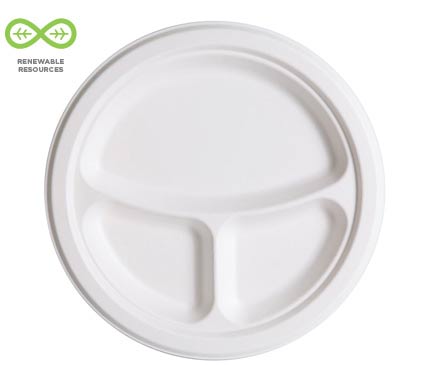
New York City recently sent out a request for proposals to supply lunchrooms by September with compostable trays and utensils—which are made out of sugar cane and can be converted easily to compost, which farmers could use in abundance—instead of styrofoam or plastic trays.
Schools in Dallas, Los Angeles, Miami, and Orlando, Fla., would also be buyers if a good price can be obtained. The compostable trays normally cost 15 cents each, compared to 4 cents for foam trays. Those trays are some of the longest-lasting products American schools throw into landfills.
But if this volume-purchasing idea works, other districts could piggyback on the contract, creating the need for some 270 million compostable trays per year. That will save a lot of polystyrene, to be sure, and, perhaps more important, create a lot of purchasing power for the schools. It also sets a good example for kids to take into adulthood and possibly for other large institutions that need to use disposable eating trays and utensils.
The school districts are members of the Urban School Food Alliance, and the group plans to see whether this increase in purchasing power can help them get healthier food down the road as well.
Now, when it comes to compostable vs disposable trays, I’m all for using the compostable trays. Kids can dump their trash and take their trays to a separate bin for composting.
But many people may wonder, if the schools want to do something for the environment, why don’t they just buy reusable plates and utensils and wash them after each lunch period. Unfortunately, shrinking school budgets long ago forced a move away from those, and market forces usually move in the direction of lowest cost. Washing dishes requires staff salaries instead of teacher salaries, storage space for dishes instead of books or computers, and the purchasing and maintenance of dishwashers instead of science labs, athletic equipment, and other student needs.
Some Chicago-area schools already use compostable utensils. Stevenson High School in Lincolnshire, for example, launched the latest of many environmentally friendly programs at the school last spring with the help of Sodexo Education and Waste Management. Students bring food scraps and compostable utensils to totes in the east and west commons areas during their lunch periods. The totes are then taken to a collection area and picked up by a truck from Waste Management twice a week.
What will it take to get more schools like this?