

There are several aspects of teachers’ jobs that are so inaccessible to standardized tests as to leave me puzzled about why so many current reform efforts in education depend so much on those tests. Then I come back to Earth and realize we have this federal law that made it that way and forever changed how the communities our schools are in and the people they serve connect with those schools and engage them in constructive dialog about their children’s future.
The public, the only rightful owner of the public schools, has come to believe that the quality of teachers can be reduced to a trend in scores on math and reading tests or a few years’ worth of progress on standardized tests, most of them multiple-choice, given to every student in the state. And so they petition their government to pass laws that render standardized tests even less representative of the quality of their schools and teachers.
But what happens when shots are fired outside an elementary school in New York? Whether math and reading scores are good or bad, teachers have to get kids to safety right away and start planning what they might do in the event of an emergency, the New York Times reports.
“This is not normal; the loss of a life is a big deal,” the paper quoted one worried parent and kindergarten teacher as saying. “I want my children to worry about homework, about violin lessons. I don’t want them to worry about a stray bullet. I don’t want them to develop fear.”
On this one November day, a 26-year-old man was shot three times in the neck right outside the entrance to a school on Riverdale Avenue in Brownsville, Brooklyn, and the criminal escaped in a Jeep Cherokee. No students were threatened—this time—though stray bullets can’t be predicted. They were safe, though, thanks to the quick action of teachers. “We worked together as a team, and we had no time to be scared,” the principal of an elementary school in the building was quoted as saying.
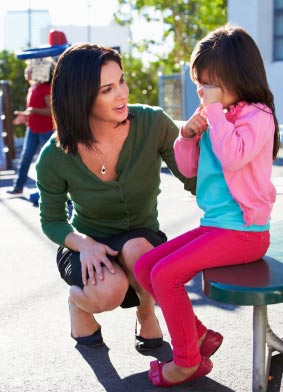
Looking back, I wonder, How will we measure a teacher’s ability to counsel her students following a violent crime like this right outside the school’s entrance? The American Academy of Child & Adolescent Psychiatry advises us that students need to develop strategies for managing and coping with stress:
When we perceive a situation as difficult or painful, changes occur in our minds and bodies to prepare us to respond to danger. This “fight, flight, or freeze” response includes faster heart and breathing rate, increased blood to muscles of arms and legs, cold or clammy hands and feet, upset stomach and/or a sense of dread.
The same mechanism that turns on the stress response can turn it off. As soon as we decide that a situation is no longer dangerous, changes can occur in our minds and bodies to help us relax and calm down. This “relaxation response” includes decreased heart and breathing rate and a sense of well being. Teens that develop a “relaxation response” and other stress management skills feel less helpless and have more choices when responding to stress.
These are the ideas that current education reform doesn’t address. Nowhere are these important life skills in the Common Core. Yet, these are the types of events that are happening in and around our public schools, especially the ones in poor neighborhoods. These are the ideas on actual kids’ minds in neighborhoods and in public schools where kids grow up in poverty—you know, those schools so many people claim their latest reform will lift up.
