

The Centers for Disease Control and Prevention has posted a document, in question-and-answer format, that deals with the recent outbreak in the Midwest of Human Enterovirus D68.
A recent article in the Chicago Tribune said, “emergency rooms in Chicago and other Midwestern cities are seeing a jump in the number of children with respiratory infections, possibly the result of a rare virus that can cause difficulty breathing but is generally not fatal, authorities said Monday.”
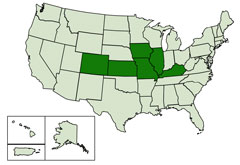
According to CDC, the virus is not common in the US. Between mid-August and Sept 12, however, 97 people in six states were confirmed to have respiratory illness caused by EV-D68.
“Enterovirus D68 is one of many non-polio enteroviruses,” CDC explains. “Mild symptoms may include fever, runny nose, sneezing, cough, and body and muscle aches. Most of the children who got very ill with EV-D68 infection in Missouri and Illinois had difficulty breathing, and some had wheezing. Many of these children had asthma or a history of wheezing.”
The Tribune said doctors at one hospital in Quincy, Ill., saw 70 cases over the Labor Day weekend in which patients’ symptoms were consistent with an EV-D68 infection. Most patients are children or teenagers, as adults are less susceptible to infection by EV-D68 than infants, children, or teenagers, the CDC wrote.
In the above video, Paul Andersen of Bozeman Science explains how the body protects itself from invading viruses and bacteria. He describes both the nonspecific immune responses of skin and inflammation and the use of antibodies to disrupt the function of specific antigens and mark them for destruction. His explanation of the immune response does an excellent job of highlighting the importance of B and T lymphocytes.
Why are adults less susceptible than teenagers to EV-D68 infection? How is this eventual immunity imparted on us as humans? See Common Core English language arts literacy standard RST.11-12.2 for more information.
One prominent deficiency of the Next Generation Science Standards, from a biological point of view, is their exclusion of the immune system. In middle school, MS-LS1 limits “assessment … to the circulatory, excretory, digestive, respiratory, muscular, and nervous systems.” At the high school level, HS-LS1 seems more concerned with homeostasis than with immunity. “Assessment does not include the cellular processes involved in the feedback mechanism,” it says.
As we see prominently in the news, though, the immune response is important for students to understand and should be included in any revision of the NGSS.
