

A judge vacated the verdicts in September of two men convicted of raping and murdering an 11-year-old girl in North Carolina back in 1983, the New York Times reports. DNA evidence from a cigarette butt collected from the scene showed that another man committed the crime.
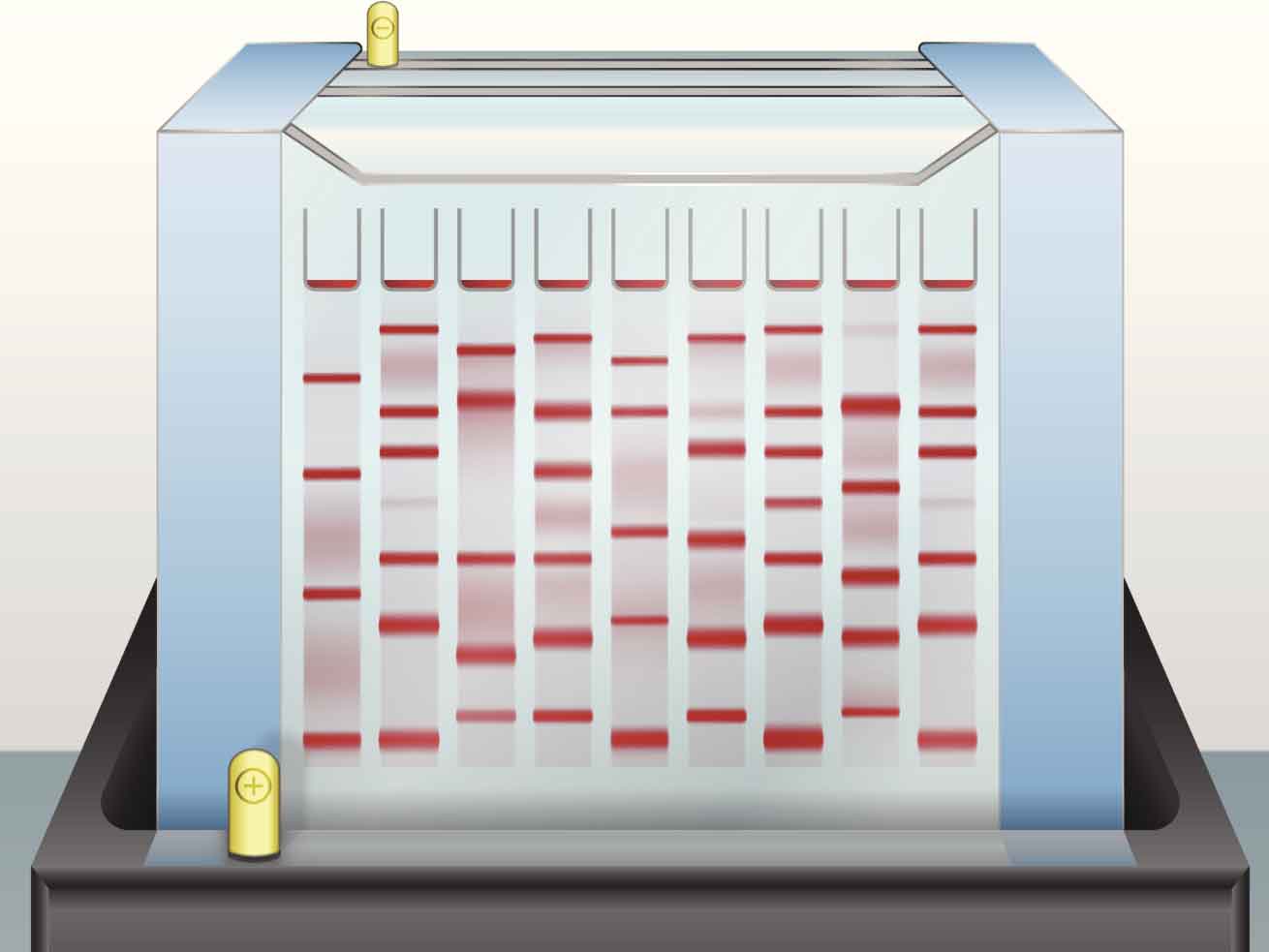
The district attorney in the case says he has no additional evidence to bring and doesn’t plan to reprosecute the case. The original guilty verdicts, which have now been thrown out, were based on confessions given by the two men, but both maintained that police had coerced them into confessing to the crime.
The man linked to the DNA evidence is now serving a life sentence for a crime that had nothing to do with this rape and murder.
Some basic information about DNA fingerprinting
Almost 30 years ago, Alec Jeffreys published his landmark Nature papers on the use of minisatellite probes for DNA fingerprinting of humans (Jeffreys et al. Nature (1985), 314:67–73 and Nature (1985), 316:76–79). Additional results soon started coming in, and at the First International Conference on DNA Fingerprinting in Berne, Switzerland, in 1990, many scientists enthusiastically discussed the technique that would revolutionize forensic science and, indeed, many sciences.
In their book Truth Machine: The Contentious History of DNA Fingerprinting (University of Chicago Press, 2010), Michael Lynch, Simon A Cole, Ruth McNally, and Kathleen Jorda write:
People lie, but the evidence speaks the truth—that is, as long as one listens to it “without presuppositions.” In CSI and its numerous spin-off shows, forensic analysts are depicted as highly skilled scientists who distrust mere testimony and circumstantial evidence in favor of crucial bits of physical trace evidence. Whenever such evidence is allowed to speak for itself, criminal identifications reach a conclusive end.
And that’s precisely what happened in this 1983 rape case. In reality, forensic science is much fuzzier than TV portrays. Still, DNA can speak for itself; it just may take a while, especially if the case comes from 1983, when there was no DNA fingerprinting.
Additional resources
- PDF on DNA fingerprinting from Cal State, Northridge
- Encyclopædia Brittanica article on DNA fingerprinting
- Article from “Exploring Forensics” website in the UK
- Article from BBC-Science on DNA fingerprinting and forensics
- Interactive lab (game) to run a DNA fingerprint you collect (PBS-Nova)
Should we execute convicted murderers? See Common Core English language arts speaking and listening standard SL.11-12.2 for more information.
