

Thanks to misguided education policy, the Common Core standards are like a sitting duck as we take easy, close-range shots at the tests aligned to those standards.
The Ohio state House of Representatives passed HB 193 on Jan 22 by a vote of 90-1, a bill that would delay online testing from PARCC until the 2015-16 school year for high school students, the Cleveland Plain Dealer reports. There was only one no vote in the state’s House of Representatives.
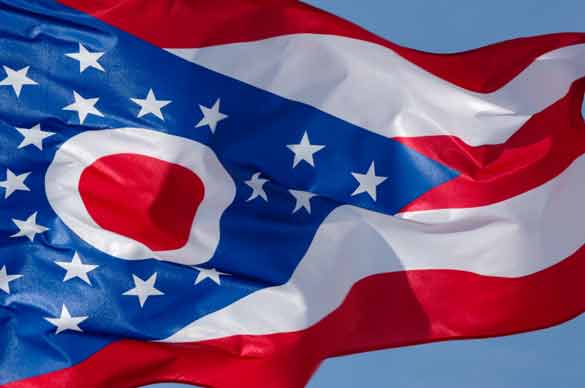
The bill, which would have no effect on the online PARCC tests for students in third through eighth grades, would also delay the phase-out of the Ohio Graduation Tests by one year. Since 2009, the state has been on track to replace the OGTs with new end-of-course exams for students entering ninth grade after July 1, 2014; the bill would reset that date to July 1, 2015.
As approved in the House, the bill would also allow students to receive a special seal on their high school diplomas indicating they had passed a special international vocational exam, and it would allow the state’s department of education to identify equivalent end-of-course exams or nationally-normed tests that school districts could give students at the end of their required high school courses. That is, schools would get the choice to use exams in high school math and English language arts not developed by PARCC.
The bill’s sponsor, state Rep Andrew Brenner, a Republican from Delaware County, is ostensibly taking aim at the Common Core standards with this bill—maybe not on purpose, but this bill will put the Common Core in Ohio on a reverse course. It seeks to give educators an additional year to either vet the standards or find new ones, and how do you suppose that will come out at this point in the evolution of the Common Core across the country?
Mr Brenner uses the argument that many school districts in the state, especially those in rural areas, don’t have the computer resources to administer the tests from PARCC online, but this argument leads down a dark alley. It’s true that more than half the schools in Ohio aren’t ready for a full online administration of the PARCC tests, but printed versions will be available until the 2017-18 school year. They’ll cost more, though, and it’s not clear where that extra money would come from in Ohio, which has already cut funding to traditional public schools as a result of charter schools and vouchers in the state.
The wild goose chase this bill will enable in Ohio is nothing more than a veiled attack on the Common Core, and it hits the Common Core right where it hurts: By putting off the tests that are aligned with the standards in the Common Core, the standards themselves will be pushed into a ditch on the side of the road.
That’s because, in one of the most colossal blunders in education policy history, federal education officials have intimately attached the tests to the standards. America’s schools can’t have one without the other. As a result of this misstep, any action that takes down the tests will take down the Common Core. To be blunt, the tests from PARCC are “easy pickings.”
The Plain Dealer makes the claim that the adoption of the standards was “voluntary” in 45 states plus the District of Columbia. This isn’t true: The federal government made it so that vast sums of money were linked to the adoption of the standards, holding a gun to the head of the state legislature. The standards themselves may be good and working in several classrooms across the state, for the most part, but their adoption wasn’t “voluntary.”
However, the bigger picture here is that the standards will self-destruct if the tests can’t be delivered. There’s no money to be made in writing standards of learning, after all, and in the end, the Common Core sets up educational entrepreneurs with multi-million dollar contracts. Money in education only comes when schools purchase computer equipment, when they pay test makers to administer, score, and twist the statistics on tests they claim are valid, reliable, and fair with regard to the standards, and when they buy textbooks and other curricular materials that guarantee to prep our children not for the standards but for the tests.
To make the connection between the Common Core and the tests even more obvious—and unyielding—teachers in Ohio will be evaluated not based on the standards but based on the tests. That means, in all likelihood, if teachers want to keep their jobs, they will teach only what can be tested, which will narrow the curriculum in the state. The standards contain many parts that can’t be tested on a standardized test, in a normal test-taking session, and those parts will eventually be removed from the state’s classrooms, unless teachers sacrifice their jobs for teaching a few kids straight from the standards.
Don’t get me wrong: I’m a big fan of the Common Core, as it would have existed in an ideal world, where educators convened conferences to massage it from its crude beginnings to a set of standards that led to a better education for our students. That’ll never happen, though. Or rather, the tests will serve to massage the standards, because only those standards that can be tested will be taught.
We applaud the Ohio House of Representatives for at least trying to undo a great wrong in our public schools. The tests need to stop, and if the Common Core is some kind of collateral damage, I’m afraid we’re going to have to take it. My friends and I didn’t attach the tests to the standards; state and federal education officials did that all on their own. Now the piper must be paid.
HB 193, in its pure form, also requires the more than 800 school districts in the state to develop a formal process that engages “teachers and parents” when picking textbooks and other curricular materials. This is the kind of “consensus of educators” I had hoped for when the Common Core was first developed. But now we’ve attached the tests, and I’m just not sure the standards, even if they were flawless, which they’re not, can survive the take-down of tests. So even though most districts in the state would use the Common Core and pick curricular materials that support it, the tests will dictate the selection of materials because that’s what teachers will be evaluated on.
Almost every single state representative in Ohio gets it. Will the Senate? Will the governor?
Tying the tests to the standards was the wrong thing to do, but it has happened. We don’t appear to live in a country based on democratic principles, where rules and laws come from the people to support them, but in a plutocracy, where the only opinion that has any weight is that of a few big corporations, which are clearly capable of buying editorials in Ohio’s biggest newspaper.
