

In 1997, the Maryland General Assembly undertook a study to determine the prevalence of Ritalin use in treating Maryland’s schoolchildren for Attention Deficit Hyperactivity Disorder. A special task force concluded its work three years later and found that Maryland’s usage rate for Ritalin was the fourth lowest in the nation: only 2.92 percent of Maryland’s 820,000 or so schoolchildren were even using prescription Ritalin. Scandalous it was, Maryland near the bottom!
The task force said that wasn’t necessarily good, the Baltimore Sun reported. “Should we be happy we’re at the bottom?” the Sun quoted Dr Sidney B Seidman, task force chair, as saying. He was at the time an assistant professor of pediatrics at the Johns Hopkins School of Medicine. “Maybe we shouldn’t be so happy. I’m wondering if we’re doing a good job making the diagnosis of ADHD.”
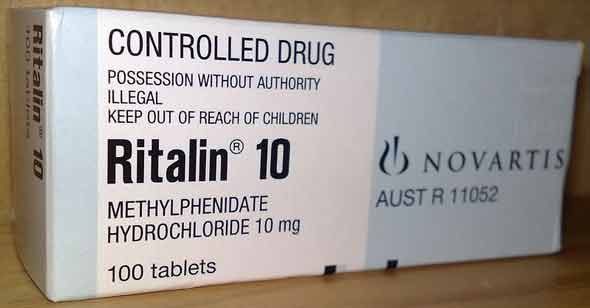
A few years later, No Child Left Behind happened. The law bolstered Maryland’s belief in medicating children: it was now essential to drug kids so they wouldn’t fidget and blurt out while teachers were trying to teach the majority of students how to take standardized tests. The push from pediatricians at world-renowned hospitals added to the push from principals in our schools: we had to give kids more Ritalin and we had to make sure we were properly diagnosing every single case of ADHD in the state so we could get those test scores up.
Pediatricians and psychiatrists knew, of course, all along, that there was no actual medical test for ADHD. But that didn’t stop principals from sending low-income kids, whose scores were lower on standardized tests anyway, to doctors complaining of an “inability to focus on schoolwork.” We wrote a piece about this phenomenon about a year and a half ago, here. “I don’t have a whole lot of choice,” one pediatrician was quoted as saying. “We’ve decided as a society that it’s too expensive to modify the kid’s environment [in school and in the community]. So we have to modify the kid.”
Now a book has come out, which seems to confirm what people have suspected since we noticed the increases in ADHD diagnoses and Ritalin usage: ADHD Does Not Exist: The Truth About Attention Deficit and Hyperactivity Disorder as a title is self-explanatory. The book, which came out yesterday, is written by Richard Saul and available from Amazon.com for $16.96, here.
If you are an educator today, you must read this book. Here’s the dust cover:
We are witnessing a global epidemic of ADHD. Millions are suffering from attention issues, while millions more are reliant on stimulant medication to perform at school and at work. Despite decades of advancements in neuroscience, the definition of ADHD has remained essentially unchanged since its introduction in 1980, and its prevalence in the population has skyrocketed.
In this controversial and landmark work, Dr Richard Saul draws from five decades as a practicing physician and researcher in the field to contend that the definition of ADHD as we know it is completely wrong. Instead, he argues that the “disorder” is a cluster of symptoms stemming from more than 20 other conditions, each requiring separate treatment. The detailed list ranges from mild problems like poor eyesight, sleep deprivation, and even boredom in the classroom, to more severe conditions like depression and bipolar disorder.
Through the lens of history and into the present day, Dr Saul examines “ADHD,” exploring the rising cultural and medical trends that have birthed the stimulant epidemic. Both comprehensive and illuminative, ADHD Does Not Exist is essential reading for doctors, practitioners, educators, and individuals who are seeking an honest approach to understanding and treating this complex condition.
In short, the error of principals and pediatricians alike has been defining ADHD by its symptoms—kids who can’t pay attention, sometimes for sittings of several hours as they take practice tests on a more than regular basis to prepare for the real thing, fidgeting or running around, talking very fast, exhibiting repetitive behavior—instead of by its causes.
Even kids who have the “problem” of being gifted, he writes, can be diagnosed with ADHD given the symptoms. Normally, a diagnosis would come after interviews with the child, parents, teachers, and so on. But when a principal says a child is in danger of failing statewide standardized tests because he can’t focus in class, parents run to the doctor to insist on stimulants for their children. It might be illegal for principals to recommend stimulants, but laws in many states are fuzzy on principals who describe students’ behavior as unfocused. The fear is that some doctors will perform less than a thorough workup for ADHD and just write prescriptions for the stimulants.
In the time since Maryland’s breakthrough task force, ADHD diagnoses in the US have increased by more than 40 percent. Eleven percent of US children have now received that diagnosis. Most of them take prescription stimulants like Ritalin or Adderall.
We need to look at this much more carefully than we are and bring in knowledge that has been gained since the task force’s prodding to increase the diagnosis of ADHD in our schoolchildren. This book, which Dr Saul says he wrote “to be proactive,” is a start.
