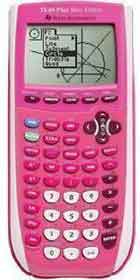
Year 6 students in he UK, comparable in age to fifth graders in the US, took the national examinations in math yesterday and today, and they all used calculators, the BBC reports.
But the calculators may be banned this summer for students in Years 3 through 5, Schools Minister Elizabeth Truss has said. The “Key Stage 2” national curriculum tests, often known as “Sats,” which students take at the end of primary school, includes a mental arithmetic paper, one mathematics paper where calculators are used, and one where they’re not allowed.
“Banning calculators in primary school tests will help end the culture of reaching for a calculator at the first sign of a tricky sum,” she was quoted as saying.
But many math educators at Oxford, Cambridge, and King’s College London say the ban won’t benefit students. The news agency quoted Anne Watson, emeritus professor of mathematics education at Oxford University, as saying:
There is a substantial amount of good evidence on calculators in schools, mainly from the US, and none of it shows their use is detrimental to pupils’ learning. In fact, students who use calculators in lessons score as high or higher in tests, taken without calculators, compared to those who do not. On the whole, the use of calculators as an integral mathematical tool has been shown to be beneficial in the development of mathematical problem solving.
Some math education experts suggest making intelligent tools like calculators available—and teaching students how to use them intelligently—can enhance math understanding as it exists in today’s world. The government, however, has rejected the argument for the tests, claiming that educators in high-performing education systems like Singapore, Hong Kong, and Massachusetts, realize that “calculators should not be used as a replacement for basic understanding and skills.”
For the record, students in Massachusetts, once the tests from the Partnership for Assessment of Readiness for College and Careers go live, will be using calculators on certain portions of standardized tests in math from third grade through high school. The PARCC math tests will allow students to use a calculator, which will be provided on the screen at an appropriate level, for certain sections but not for others.
Just like it is in the UK now. Yay, Massachusetts!
But in terms of large-scale research about the benefits of calculator use on standardized tests, there’s not much in the published record. For example, a study from 2012, published this year in Education and Training in Autism and Developmental Disabilities, considered five fifth graders with mild intellectual disability.
In math performance, using computation and word problems, both scientific and graphing calculators “were effective in increasing the accuracy and efficiency of the mathematical performance of all five students. Results support the use of calculators for students with mild intellectual disability when working on computation and word problem-solving questions.”
In the study by Gulnoza Yakubova of Duquesne University and Emily C Bouck of Purdue University, for four of the five autistic students, calculators reduced the amount of time spent on subtraction and word problems, showing that calculators can enhance performance on math tests.
“Teachers should allow students to use calculators to perform computation operations and spend more time on teaching conceptual understanding of problems and even progressing to more advanced mathematics,” they write. “This further helps bridge the achievement gap between students with and without disabilities.”