

It sort of depends on whether we’re talking about music performance or math problems, a new meta-analysis of existing research suggests.
The meta-analysis is published in the journal Psychological Science. A clever headline in the New York Times announcing the finding was “How Do You Get to Carnegie Hall? Talent.” The answer used to be “practice,” but that may not be the case.
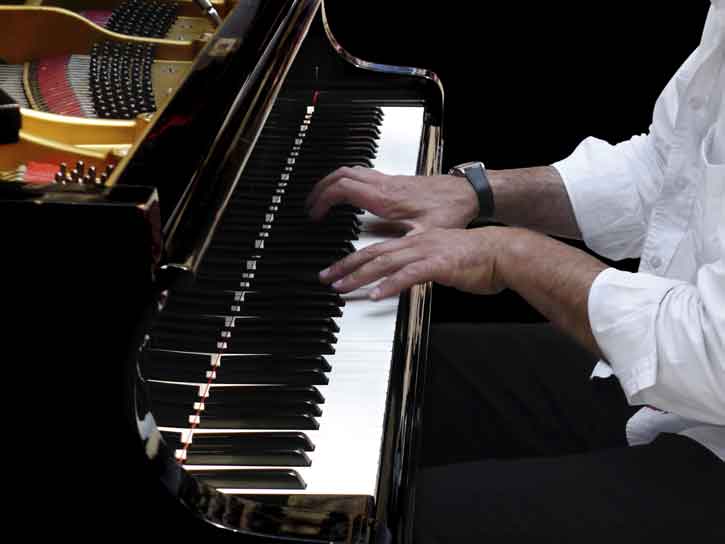
Scientists have been studying and debating whether experts are “born” or “made” since the mid-1800s. In recent years, deliberate practice has received considerable attention in these debates, while innate ability has been pushed to the side.
“Deliberate practice is unquestionably important, but not nearly as important as proponents of the view have claimed,” says psychological scientist Brooke Macnamara of Princeton University.
With colleagues David Z Hambrick of Michigan State University and Frederick Oswald of Rice University, she scoured the scientific literature for studies examining practice and performance in domains as diverse as music, games, sports, professions, and education.
Of the many studies they found, 88 met specific criteria, including a measure of accumulated practice and a measure of performance, and an estimate of the magnitude of the observed effect.
Nearly all of the studies showed a positive relationship between practice and performance: The more people reported having practiced, the higher their level of performance in their specific domain.
Over all, practice accounted for only about 12 percent of individual differences observed in performance across the various domains.
However, the domain itself seemed to make a difference. Practice accounted for about 26 percent of individual differences in performance for games, about 21 percent of individual differences in music, and about 18 percent of individual differences in sports.
But practice only accounted for about 4 percent of individual differences in education and less than 1 percent of individual differences in performance in professions.
That is, when it comes to music performance, practice, practice, practice. When it comes to homework, don’t get any idea that just doing a hundred math problems every night will boost your SAT scores. That’s not how it works.
