

As the expression goes, the game remains the same, but only the names have been changed. The state of Maryland has been named Education Week’s No. 1 overall school system for the last four years, and by Aug. 28, 850,000 K-12 students will be in those public classrooms.
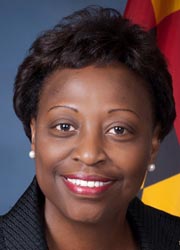
Dr Lillian Lowery took over as state superintendent of schools on July 1. She said, “Our state is committed to supporting innovative education programs for all schools, making absolutely certain there are improved classrooms in every neighborhood. We are working to strengthen instruction and boost rigor for our students. Maryland schools are looking forward to another safe, productive, and exciting year.”
In a press release, she highlighted the state department’s Twitter handle, @MdPublicSchools, saying it would give educators, parents, and others interested in Maryland Public Schools another way to get the latest news and information. Gov. Martin O’Malley tweeted his welcome to the Maryland State Department of Education yesterday.
Things to watch this year
Race to the Top begins year three. Maryland’s multi-faceted school reform package, fueled by the largest federal grant in state education history, is strengthening the state’s schools.
Maryland will pilot-test new teacher and principal evaluation systems this school year. These evaluation systems work in such a way that “student growth” accounts for 50 percent of each educator’s evaluation score.
Maryland curriculum is incorporating national standards. More than 7,000 teachers this summer took part in the Educator Effectiveness Academies, which focused on the Common Core State Standards that the department hopes will help raise the bar for students throughout the state.
Improved federal accountability rules are now in place. The federal No Child Left Behind (NCLB) program helped schools and systems focus on problems with certain subgroups but unfairly labeled too many schools that were making progress. Maryland this spring received a waiver from many of NCLB’s most onerous aspects.
The state hopes to improve student discipline processes. The State Board of Education is nearing completion of new regulations designed to keep more students in school, making certain strong discipline does not mean shutting out students from the educational process.
The state board in August approved emergency regulations designed to help prevent concussions and serious head injuries in interscholastic athletics.
More high-level career education programs are being launched. Project Lead the Way, career and technology education programs, and programs in biomedical sciences have nearly doubled across the state in the past two years.
Public charter schools are continuing to grow in Maryland. Two new charter schools are scheduled to open this fall, bringing the total to 52.
Finally, while spot shortages of teachers exist in certain fields and certain schools, most classrooms will be filled with highly qualified teachers when their doors open in the next two weeks.
Student enrollment in Maryland
The state department of education released numbers yesterday for enrollment in Maryland’s public schools. The high watermark came in 2004, with 869,113 students enrolled. Numbers then fell steadily to 843,861 in 2009. For the last three years, enrollment has been rebounding a little, reaching 854,086 last school year. That was the highest it had been since 2007. Numbers aren’t available for this year yet.
(Schools usually measure enrollment at the end of September, and we’ll report it when we have it for the current school year. The 850,000 in the lead is an estimate.)
Racial composition of Maryland’s students is as follows:
- White, 42%, decreasing
- African-American, 35%, decreasing
- Hispanic, 12%, increasing
- Asian, 6%, increasing
- Two or more races, 4%, increasing
The percentage of Maryland students eligible for free or reduced-price meals—sort of the federal gold standard for “living in poverty”—has been steadily rising over the past decade. In the 2011-12 school year, 43 percent of Maryland students were eligible, up from 29.7 percent 10 years earlier.
Doors open
Prince George’s County Public Schools will open first: next Monday, Aug. 20. The SEED School of Maryland, the statewide public residential school, is scheduled to start that day as well.
Schools in Calvert and Talbot counties will open on Tuesday, Aug. 21. First- through sixth-graders and ninth-graders in Dorchester County will also start school on this day, with remaining students starting on Wednesday, Aug. 22, which is when schools in Cecil, St. Mary’s and Washington counties will begin classes.
All remaining school systems start on the following Monday, Aug. 27, although some grades don’t start until Aug. 28 in Anne Arundel, Kent, Queen Anne’s, and Wicomico counties.
