

A year from now, the snacks sold at some schools in lunchrooms and in vending machines will have to be updated to comply with new rules sent out by the US Department of Agriculture on June 27, Education Week reports.
The push is away from added sugar and toward fruits and vegetables. We applaud the new regulations, and they’re nice to hear from the US government. Eating habits have grown worse in recent decades, especially for America’s children, and we have to start somewhere. That “somewhere” might as well be in the schools.
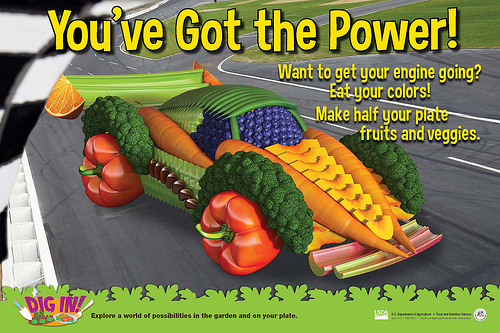
Courtesy: US Department of Agriculture
“Millions of students currently have widespread access to snacks and beverages that are high in sugar, fat, and salt, but limited access to nutritious options such as fruits and vegetables in school stores, snack bars, and vending machines,” the journal quoted Jessica Donze Black, director of the Kids’ Safe and Healthful Foods Project, as saying. “With many students consuming up to half of their daily calories at school, these new standards represent the kind of positive change we need to help reduce obesity rates among children and teens.”
Highlights:
- Snacks must be either a fruit, vegetable, dairy product, or protein food
- Exceptions include foods rich in whole grains and combination foods ≥ ¼ c of fruits, veggies
- Exception (1st 2 years) if foods have 10% of a nutrient designated as a children’s health concern
- Maximum calories: 200 for snacks, 350 for entrées
- Maximum sodium per snack: 230 mg in 2014-2015, 200 mg in 2016-2017 (480 mg for entrées)
- Calories from fat: limited to 35 percent by weight, except dried fruits, veggies, cheeses, nuts
- Sugar: limited to 35 percent by weight, except dried fruits, veggies
- High schools can sell caffeinated, carbonated soda up to 12 oz, 60 calories max
It’s the first time the snack regulations have been upgraded since the 1970s, and the new rules can be seen as micromanaging the consumption of fun foods in our schools. They do nothing to change overall eating behavior, such as that found in students’ homes, but they are bound to make a dent in the snack consumption by US children.
Furthermore, the USDA has no way to enforce the rules, which do little to educate children about good eating habits. However, it’s possible that children who have no other vending machine choices besides fruits and vegetables might discover how delicious those foods are and make better decisions outside of school.
Some argue the US subsidizes corn and high-fructose corn syrup, one of the main ingredients in carbonated soda drinks. We have, with our left hand, created a demand for soda and high-fructose corn syrup and, with our right hand, taken it away from kids. This is where community pressure is needed. The USDA has published guidelines to support healthy eating in schools; now we need to enforce them in communities.
