

In just about every state, teachers and other school officials have to report to the proper authorities any suspected child abuse as soon as they reasonably believe a child is being abused. This law exists in Maryland, Illinois, and for the purposes of this case, Ohio.
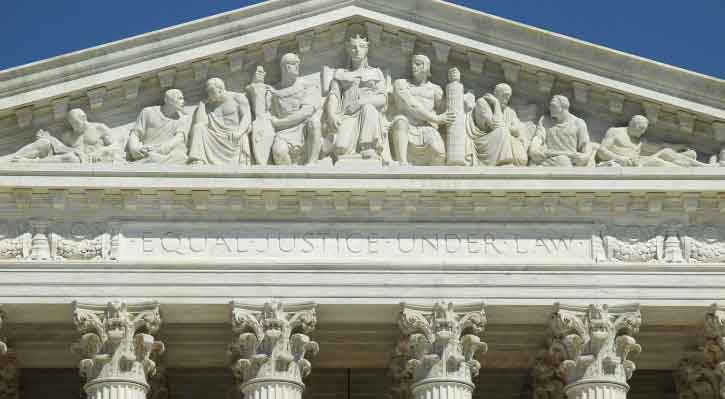
On Oct 2, as the US Supreme Court opened its term, justices agreed to hear the case of Ohio v Darius Clark, here.
The court will decide whether an individual’s obligation to report suspected child abuse makes that individual an agent of law enforcement and whether statements made to that person in a classroom, outside a courtroom, can be considered testimonial, even when the child who made the statements can’t testify?
Briefly, a 3-year-old, L.P., was questioned by a preschool teacher about bruises on his face. After some probing, the preschool teacher suspected that the mom’s boyfriend, Darius Clark, was abusing L.P. Mr Clark was subsequently arrested and charged with multiple counts of child endangerment, felonious assault, and domestic violence.
At the trial, L.P. was judged incompetent to testify, so the preschool teacher and several other individuals testified as to what he had said. Mr Clark was found guilty on most counts and sentenced to 28 years in prison.
However, the Confrontation Clause in the Sixth Amendment may be a problem:
In all criminal prosecutions, the accused shall enjoy the right to a speedy and public trial, by an impartial jury of the State and district wherein the crime shall have been committed, which district shall have been previously ascertained by law, and to be informed of the nature and cause of the accusation; to be confronted with the witnesses against him; to have compulsory process for obtaining witnesses in his favor, and to have the Assistance of Counsel for his defence.
Since L.P. couldn’t be cross-examined by Mr Clark, Ohio’s Eighth District Court of Appeals threw out the conviction and ordered a new trial. The Ohio Supreme Court reversed, finding that statements made to the teacher, as a mandated reporter, empowered her as an agent of law enforcement, similar to what a police officer would be. The Ohio Supreme Court thus decided that her statements could be admitted as evidence, just as if the child had made them to a police officer.
The case is all about what role teachers play. In this case, L.P. wasn’t complaining about injuries or pain. The teacher had just noticed some bruising on his face. So L.P. didn’t seem to be in immediate danger, and the Ohio Supreme Court held that any statements made to the teacher were made for the purpose of gathering evidence against the abuser, not for the purpose of maintaining a safe school environment for the student.
If the Supreme Court decides that a statutory duty to report suspected child abuse changes the primary mode in which teachers interact with children in our schools, it’ll be bad for Mr Clark: if the statements made to the teacher were “testimonial” in nature, he was given the chance to confront his accuser, and his conviction would be upheld, at least in terms of the Sixth Amendment.
If, on the other hand, the Supreme Court finds that statements L.P. made to the preschool teacher were non-testimonial, Mr Clark didn’t have the chance to confront his accuser in court, because the child was judged incompetent to testify.
Develop a multimedia presentation about the cases the Supreme Court has reviewed in the last 60 years about schools. See Common Core English literacy standard RST.9-10.7 and this graphic in Education Week for more information.
