

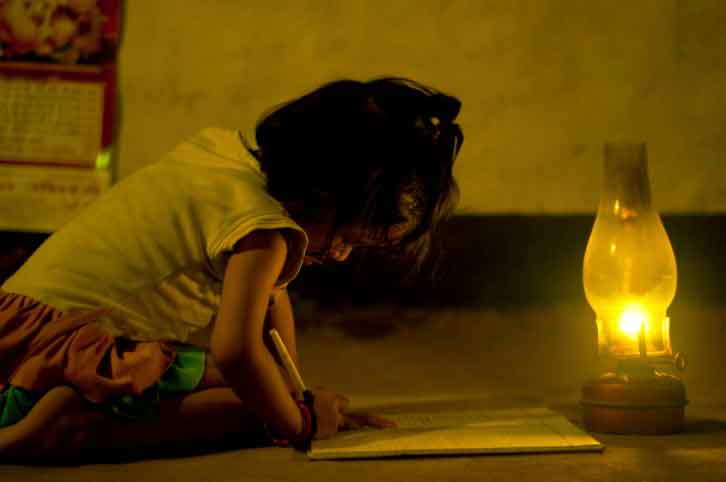
Many child and public education advocates have observed that schools in impoverished neighborhoods face an uphill battle because of entrenched, inter-generational poverty.
School programs, such as the school lunch program, try to provide services for some of the 16.4 million US kids who now live in poverty, but few programs, either sponsored by the government or private foundations, address both the needs of children and those of adults, all but dooming those kids to an adult life of poverty, the Salt Lake Tribune reports.
The Annie E Casey Foundation, based in Baltimore, just released its 2014 Kids Count data book, calling for a two-generation approach to easing the effects of poverty. Patrick McCarthy, president of the foundation, was quoted as saying, “For too long, our approach to poverty has focused separately on children and adults, instead of their interrelated needs.”
The foundation says about 42 percent of US children born to parents at the bottom of the income ladder stay there, the Tribune noted from the report. They are also
- Less likely to live with a parent (or get hugs)
- More likely to have developmental delays
- Less likely to graduate from high school
“Put common sense into common practice by structuring public systems to respond to the realities facing today’s families,” the Kids Count report advises.
Without a doubt, this is why education reformers shy away from any discussion of poverty: It takes too long to get to a solution, and business leaders and politicians, who drive the most outspoken reform efforts, want results now, not a generation from now.
From the other side, schools have trouble teaching students who live in poverty. The main reason for this difficulty is that the kids put school relatively low on their priority list, compared with the real problems they face in their lives, which include abuse and neglect. Part of that neglect is the absence of appropriate medical care and mental-health care, which has led some school officials to address these issues.
“The extent to which doctors provided family-centered care decreased significantly as poverty level increased,” wrote Bonnie Strickland, et al, in the journal Pediatrics in May 2004. More recent research continues to support this finding, which was based on the National Survey of Children With Special Health Care Needs.
And doctors, for their part, have started recognizing poverty as a childhood disease. Perry Klass, MD, writes on a New York Times blog: “Is your housing situation secure? Can you afford groceries? Do you go with the cheapest fast food? Can you get the prescription filled? Raising children in poverty means that everything is more complicated.
“Me, I’m one generation out. My mother will tell you about her Depression childhood, the social worker who checked the family’s pots to see whether they were secretly able to afford meat, the landlord who put the furniture out on the street. It wasn’t character-building or noble, she says. It was soul-destroying, grinding and cruel.”
Dr Klass quotes one of his colleagues as saying that once the neglect stalls the development of a child’s brain for three, four, or five years, as often happens in households in poverty, “you can’t go back.” Thus we see in young children the root of inter-generational poverty.
Education is a key to getting kids out of poverty, but first, they have to pay attention to their education, to what their teachers are teaching. This doesn’t happen often enough in schools in impoverished neighborhoods, and the problem may not be the schools or the kids but the generation above them. Time to take steps.
