
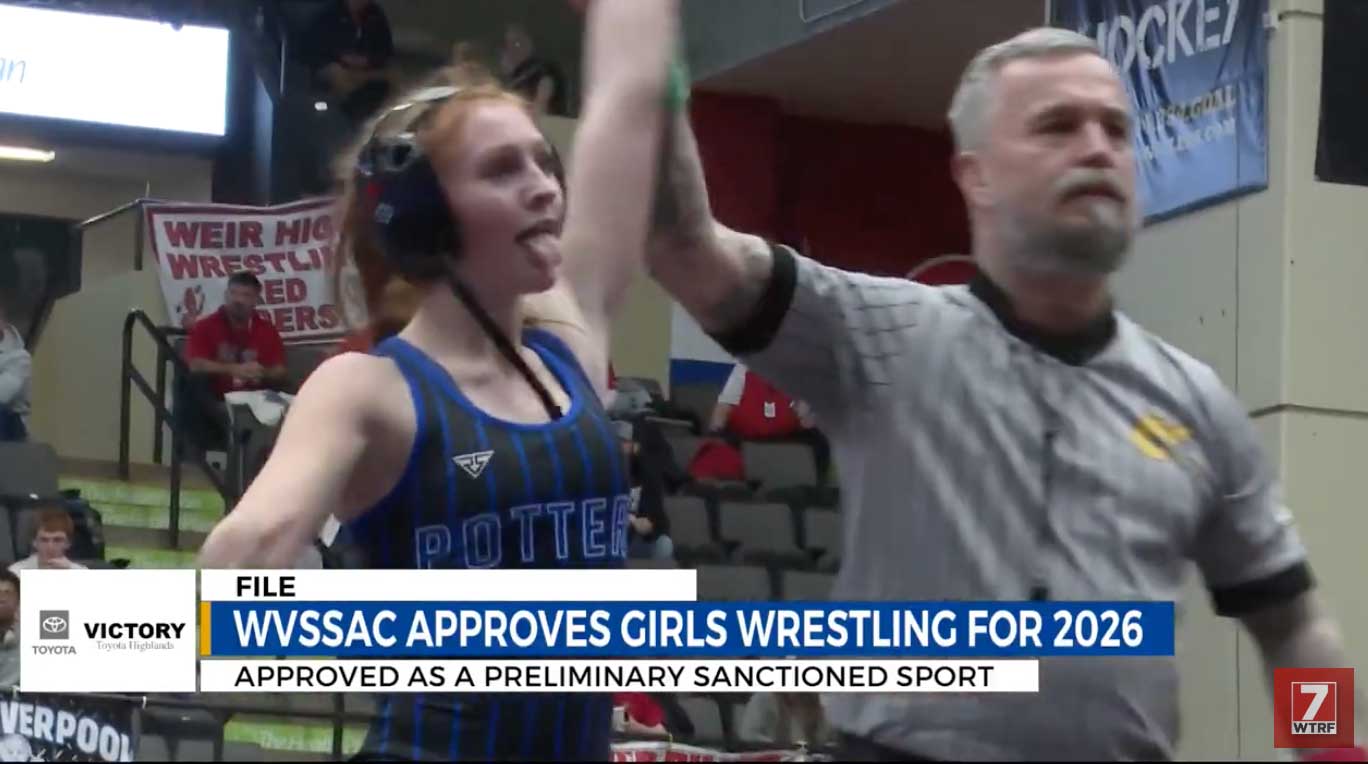
Across the high school landscape, a quiet revolution is taking place on the mats. What was once a male-dominated arena is rapidly transforming as girls’ wrestling emerges as one of the fastest-growing secondary school sports in the country. This surge is more than just a trend; it’s a fundamental shift in athletic opportunity, driven by students who are breaking long-standing stigmas to build a new kind of community.
As reported by Logan Lauman in Cincinnati, the growth at Oak Hills High School mirrors a national explosion in participation. The National Federation of State High School Associations (NFHS) recently noted that girls’ wrestling participation has skyrocketed, with over 74,000 participants nationwide–a staggering increase from just a decade ago. At Oak Hills, this momentum is personified by athletes like junior captain Chloe Kelley, Logan writes. Recently named Athlete of the Week, Kelley led her team to a second-place finish at the Milford Invitational, anchoring a roster that has grown to 15 dedicated athletes–a figure that Logan notes would have been a mere dream in years past.
This growth is particularly evident in the Midwest, where the sport has found a dedicated foothold. In Springfield, Nebraska, student journalist Sierra Stednitz captured the end of a triumphant season for Platteview High School. Despite a roster of only two, Stednitz and teammate Maddy Stapp demonstrated that the impact of the sport isn’t always measured in numbers but in the “extra grit” required to represent a school as a duo. Their third-place conference finish highlights a broader trend: as more states officially sanction girls’ wrestling, which now reaches about 40 states, schools are finding that even small beginnings pave the way for permanent programs.
Further south, the numbers tell an even more dramatic story of expansion. Writing from Oklahoma City, Kaylie Fedor highlights statistics from the Oklahoma Secondary School Activities Association showing that participation statewide has nearly tripled in just two years. Since the sport was officially sanctioned as a varsity program in Oklahoma in 2020, the “gender norm” is being rewritten. At Bishop McGuinness Catholic High School, Head Coach Marty Monigold sees the sport as a vital tool for empowerment, noting that the junior high divisions are seeing more wrestlers than ever before.
Beyond the physical demands of the sport, these students’ reports consistently point to a deeper benefit: the development of “strength beyond the stigma.” At Bishop McGuinness, a freshman and her teammate emphasize that while the initial adjustment of adding girls to a wrestling team took time, the result was an environment built on mutual respect. The “one big family” atmosphere she described is a recurring theme nationally, as wrestling provides a unique space where athletes learn to manage time, discipline, and complex relationships across traditional social barriers.
This national movement is also being bolstered by the arrival of higher-level opportunities. With the NCAA holding its inaugural Women’s Wrestling Championship in 2026, high school athletes now have a clear collegiate path. This “North Star” provides motivation for students like Kelley, who credits her coaches and parents with setting high standards that push her to grow as both a wrestler and an individual. The discipline learned through “tough love” on the mat is translating into confidence that lasts long after the final whistle.
The success of these programs also relies heavily on the culture of mentorship. As Sierra observed at Platteview, the bond between teammates, where veteran wrestlers explain techniques in ways that supplement coaching, is the backbone of the sport’s sustainability. This peer-to-peer support is crucial in a sport that remains intimidating to many. By fostering an environment where, as Kelley puts it, “everyone is there for one another,” these teams are creating a blueprint for what inclusive secondary school athletics should look like.
Ultimately, the stories from Ohio, Nebraska, West Virginia, and Oklahoma confirm that girls’ wrestling is no longer an “emerging” sport. It’s a cornerstone of the modern athletic experience. By providing a platform for physical strength and mental resilience, wrestling ensures that the next generation of women leaders is forged in the intensity of the circle. As these student journalists have shown, the mat is a place where barriers are broken, communities are built, and the future of athletic equality is being written, one match at a time.