

In a major food safety development, Baltimore County Public Schools (BCPS) suspended the distribution of chocolate milk across all district cafeterias following reports of a quality defect, WBAL-TV (NBC affiliate) reports.
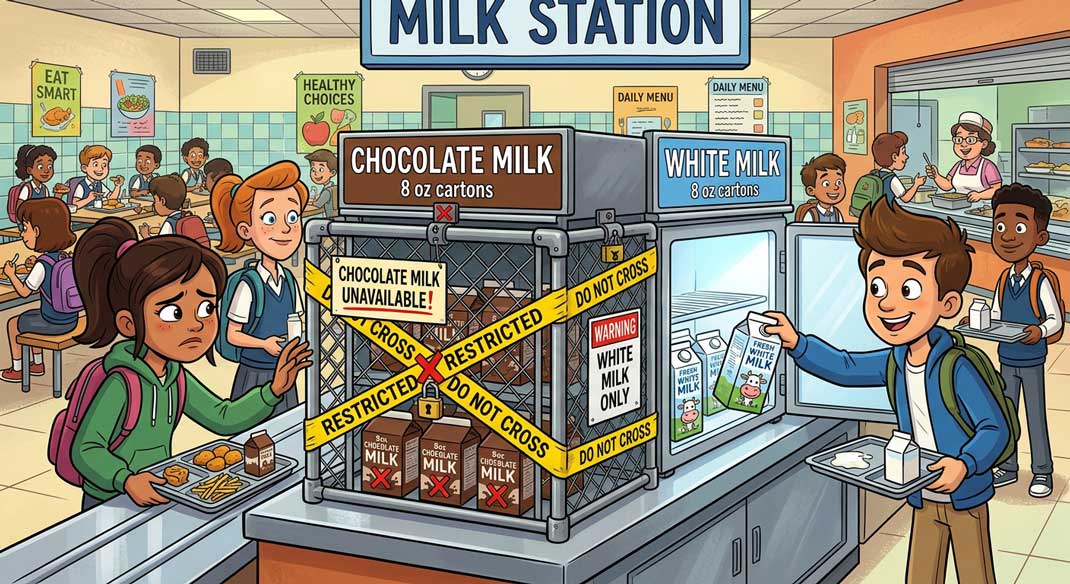
The decision, announced on Wednesday, was triggered by student complaints that the product appeared “different” and possessed an unusual, “gelatinous” consistency. While BCPS continues its investigation, regular white milk remains unaffected and is still served as a standard meal component.
Cloverland Farms Dairy, the district’s vendor, has since pinpointed the source of the irregularity to two faulty seal gaskets on a specific processing line.
In a formal communication to BCPS, Cloverland’s Director of Quality Assurance, Phil Forshlager, confirmed that the company was able to reproduce the issue in retained samples. The dairy has since replaced the defective components and conducted a comprehensive sanitation of the equipment.
Although Cloverland officials expressed “high confidence” that the repairs have resolved the issue, the district is maintaining the suspension until the vendor demonstrates that all quality and safety standards are fully met.
The Bitter Business of Baking and Bottling
The disruption in school milk comes as the broader chocolate industry faces severe economic headwinds.
Throughout 2025 and into 2026, the global price of chocolate has reached historic highs, driven by a “cocoa crisis” in West Africa. Agricultural researchers confirm that a combination of extreme drought in the Ivory Coast and Ghana, coupled with the spread of the Cocoa Swollen Shoot Virus, drastically reduced yields in regions that supply 70% of the world’s cocoa.
These supply shortages were further compounded by 10% to 15% reciprocal tariffs on imported agricultural goods, though recent policy shifts in late 2025 have begun to provide some relief to manufacturers.
One student reporter in Columbia, Maryland, noted that World’s Finest Chocolate prices, which furnish chocolate bars for fundraising activities in many schools, doubled from two years ago, increasing the price of a chocolate bar from $1 to $2.
“Now participating students are given only 40 bars of chocolate, but the $2 price seems to be discouraging possible buyers from wanting the candy,” writes Maya Alexander in the student newspaper at Long Reach High School.
