


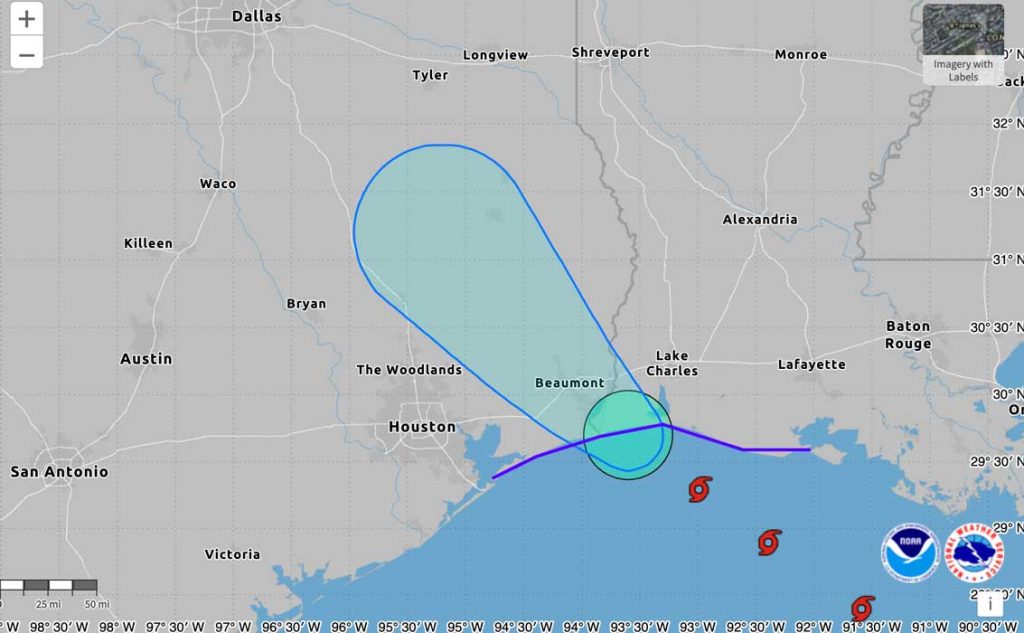
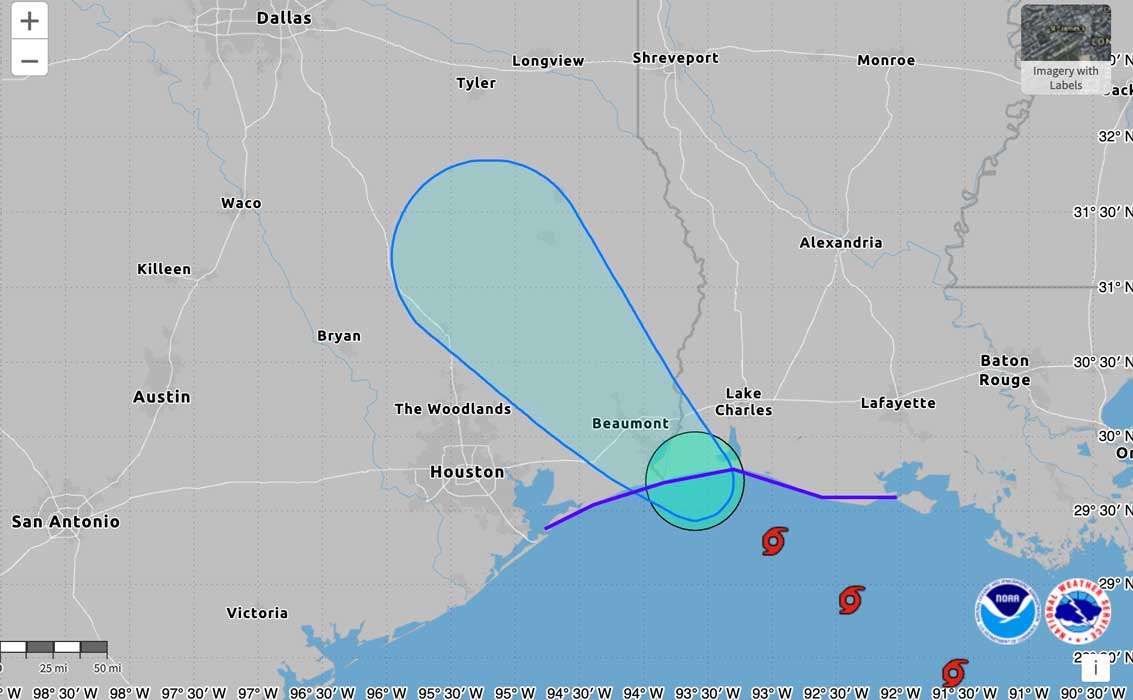
Tropical Storm Edouard Closures: Dozens of school districts across the Houston, Texas, area completely canceled classes or switched to early dismissal Tuesday. Major districts like Anahuac Independent School District, Channelview ISD, Cleveland ISD, Crosby ISD, Dayton ISD, and Galena Park ISD closed campuses entirely to prioritize family safety amid heavy tropical rainfall and flash flood risks, FOX 26 reports.

Philadelphia Heat Wave Cutoffs: In contrast to the Gulf coast storms, the Northeast faced debilitating heat. The School District of Philadelphia abruptly dismissed students early on Tuesday at 52 separate schools due to inadequate cooling systems as temperatures soared toward 90 degrees. The early dismissals left many parents struggling to arrange child care and raising renewed concerns about longstanding funding issues in the district, 6 Action News (ABC affiliate) reports.
El Niño and the Hurricane Season
Forecasters are predicting reduced hurricane activity this year due to El Niño, which has made wind shear unusually strong and widespread in the tropical Atlantic and Caribbean. That has stifled storm chances and ripped apart storms like Dolly.
“Although El Niño’s impact in the Atlantic Basin can often suppress hurricane development, there is still uncertainty in how each season will unfold,” The New York Times quoted Ken Graham, NOAA’s National Weather Service director, as saying in July, as the administration predicted that El Niño would persist into the fall and provide a stabilizing force that may act as a lid on Atlantic activity.
The “uncertainty” hurricane prediction Mr Graham is referring to involves a tug of war between El Niño and the record warm temperatures now in the Atlantic Ocean, which could overpower El Niño’s destabilizing effects on hurricanes and produce severe storms. But as a general rule, El Niño years come with fewer severe storms making landfall in the US than other seasons.
Dangerous Heat in September
The heat index forecast for today in College Park, Maryland, is 101°F. In Aurora, Illinois, the forecast calls for a heat index of 108°F today and 105°F Wednesday. In Brownsville and Corpus Christi, Texas, the heat index is expected to toy with 110° for an entire week.
While many schools in Philadelphia don’t have adequate cooling, temperature extremes like this can be dangerous to both adults and children. Such a heat wave in the northeastern US and eastern Canada would have been “virtually impossible,” a team of scientists concluded, before humans started warming the planet by burning fossil fuels.
A Failure of AC in Florida
“Hot air hits your face as you exit the building for the sixth time that day,” writes Sakina Daudaly in the student newspaper at Seminole High School in Sanford, Florida. “The Florida heat is relentless, bringing an onslaught of uncomfortable sweat; our savior is the lovely, all-powerful AC. But what happens when it is no longer so powerful?
“Well, that is exactly what happened when school started two weeks ago. Instead of opening the building doors and being greeted with a gust of cold air, students felt the exact same temperatures inside and outside. Here in Florida, the AC failing is a little bit of a crisis, or maybe a lot.”