

The myth that studying music makes you smarter in math or English has had a 20-year run in the general public, and a few Harvard psychologists and musicians have finally put it to rest, I hope, once and for all.
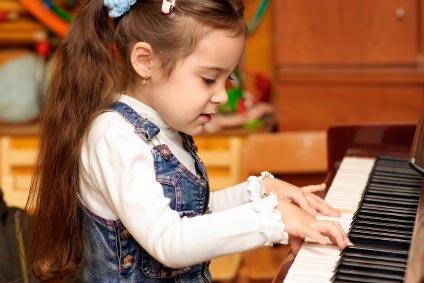
The journal Nature first published, here, a 1993 study by Frances H Rauscher, Gordon L Shaw, and Catherine N Ky, in which rats learned how to navigate a maze after hearing a Mozart sonata. That fact was somehow blown out of proportion and led some lesser-qualified “scientists” to invent the so-called “Mozart effect,” which posits that kids who listened to a Mozart sonata were smarter at certain types of tasks, such as spatial reasoning.
Two decades later and several years after studies started turning out unrepeatable, we’re finally coming to our senses.
“We don’t teach our children Shakespeare and Dante and Tolstoy because it makes them do better in American history class or at learning the periodic table of the elements,” the Boston Globe quoted Samuel Mehr, a graduate student at the Harvard School of Education who led the new research, as saying. “We teach them those great authors because those great authors are important. There’s really no reason to justify music education on any other basis than its intrinsic merits. We have our Dante, Tolstoy, and Shakespeare, and they are Bach, Duke Ellington, and Benjamin Britten.”
Their study was published yesterday in the online journal PLOS ONE. Mr Mehr set up two experiments, one that compared 4-year-olds’ scores in four areas—repetitive vocabulary, numerical discrimination, visual form analysis, and map use/navigation—after music enhancement training with scores of a similar group of students with no special training; and a second experiment that compared scores from 4-year-olds in the same areas after music enhancement training and scores after a similar group of students had received visual arts enhancement training. All classes were taught by Mr Mehr, and parents were present.
Minor differences were found in the second experiment: kids who received music enhancement training scored higher on map use/navigation, and kids who received visual arts enhancement training scored higher on visual form analysis. However, when the control group from the first experiment was combined with the students receiving visual arts enhancement training in the second experiment, no significant difference in the scores in any of the four areas was detected. No significant differences were observed in any of the other experimental comparisons.
I’m not suggesting Mr Mehr’s is the definitive study about this matter, but I am telling you that many other scientists have been unable to detect any differences in non-musical subjects between kids who get musical training and kids who don’t. The value of music in and of itself has much more to offer kids than whether it will help improve test scores on the new Common Core tests coming out next year, so please, focus on what really matters when it comes to music.
Let me review this one more time: There is no proof of any cognitive benefit in any non-musical subject or task to preschool musical enrichment. People have been looking at this for a long time, and they haven’t been able to find any connection. They can’t rule it out, because other aspects of kids’ lives are in play and we can’t just isolate kids in a vacuum and do experiments on them, but other scientists can’t reproduce most of the results.
There may be short-term effects, Mr Mehr and his team found, but after weeks of musical training at a young age, those advantages become nil. Furthermore, this study doesn’t suggest that preschool musical training has no benefits to students or to their future learning:
Children who participate in a short music enrichment program could develop a more positive attitude toward group learning situations, and this attitude may foster their later learning in school settings. To our knowledge, no study has yet investigated the existence or extent of such effects.
And this is why I have said for some time that the main benefit of music study at a young age is teamwork. When it comes to learning new ideas, the more brains you have in the room, the better. Kids learn to work together and develop a desire to work with others during music study. Along with participation in team sports and a host of other activities provided by our schools for young children, music gives them that. Musicians don’t have anything against team sports. Games work for a lot of kids; music works for a lot of kids, too. Some lucky kids are enriched by all sorts of team-building activities during the school years.
That is, the effects of music on school improvement are indirect. There’s no link from music to math, in other words, but there’s a link from music to collaboration and from collaboration to enhanced learning and from enhanced learning to better math scores. Maybe if we could stop spending so many research dollars on looking for a direct link between music and math, we could investigate some of the indirect links Mr Mehr wrote about: the positive attitude toward group-learning situations, etc. Does anybody get it yet?
