

I suppose some people will find it odd that a site that serves our schools, most of which are public schools, their communities, and their students would select an event in the life of a religious leader to be the story of the year.
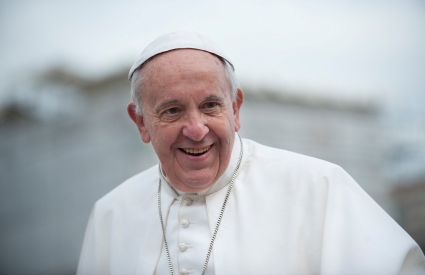
Pope Francis, however, has impressed not only Catholics but folks from other religions as well. He has struck a chord not only with kids who attend Catholic schools, of which there are many in Illinois and slightly fewer in Maryland, but political leaders as well.
We named school year 2012-13 the year of “activism” as a result of rising protests from every segment of US society over education policy. Several movements began in 2012-13, including thought-provoking websites like the one launched by Diane Ravitch, which has grown dramatically in 2013 and will likely continue its rapid growth.
Likewise, we believe Pope Francis’s election as the bishop of Rome and leader of the 1.2 billion-member Roman Catholic church will also continue to grow as people of different confessions but similar goals and desires hear him and his prayerful message. His message for peace and help for those suffering from the effects of poverty in a greedy world is heard loud and clear and is of special meaning to a great many American schools and to US policymakers.
President Barack Obama quoted from Francis’s apostolic exhortation in saying, “How can it be that it is not a news item when an elderly homeless person dies of exposure, but it is news when the stock market loses two points?”
In our schools, it’s big news when test scores on some international tests change or when we spend hundreds of millions of dollars to develop tests that make kids feel like failures, yet we don’t even notice how music programs, science labs, field trips to historical places, and other educational programs are being cut from our poorest schools because those millions of dollars have been diverted to wealthy test publishing companies.
While the earnings of a minority are growing exponentially, so too is the gap separating the majority from the prosperity enjoyed by those happy few. This imbalance is the result of ideologies which defend the absolute autonomy of the marketplace and financial speculation. Consequently, they reject the right of states, charged with vigilance for the common good, to exercise any form of control. A new tyranny is thus born, invisible and often virtual, which unilaterally and relentlessly imposes its own laws and rules (from Evangelii Gaudium).
Those laws and rules clearly need to change in terms of our public schools, and we hope Pope Francis is building a path for others to follow. Our priorities in the schools also need to change, and Pope Francis has shown the catholic church how to reset priorities quite well. For these reasons and this hopeful outlook on the world, we have named his election as pope the most significant news story for the schools in calendar year 2013.
Runners-up
- Chicago schools close, the largest single closing in US history
- The PARCC test consortium shrinks, expected savings not materialized
- New York suffers with Common Core testing in the first year
- California might not administer federally mandated tests
- A push to universal pre-kindergarten in hopes of narrowing gaps
- Mixed results on implementing the Common Core in Kentucky
- Philadelphia closes schools, lays off thousands of staff members
- Rejection of inBloom and the vulnerable data we were told was secure

Schools, like the Roman Catholic church, need a change in priorities, not necessarily doctrine. As the Baltimore Sun’s Dan Rodricks observes in today’s print edition, Pope Francis is determined to get down and dirty with corporate practices that widen inequality. “It is even more remarkable that (Pope Francis) is now preaching a bold message of reform, both for the church and for the economic system that has left so many behind,” Mr Rodricks writes. “His criticism of that system, while presented with flourishes of populism, is specific in urging a better deal for people who are struggling — that is, a system which considers people as much as profits, something between capitalism and socialism.”
“In November, Francis sent an emissary to Baltimore to tell the annual conference of Catholic bishops to spend more time tending to pastoral duties—“shepherds living with the smell of the sheep”—and less time being cultural warriors.”
My point exactly for the schools: spend more time providing the educational resources kids need in all schools and less time making a profit from our taxes. Test publishers need profit, of course, in order to keep publishing the tests our laws require. But the emphasis needs to change. As Francis asked US bishops to focus more on the people who need them than on doctrines that separate leadership from the faithful people in the church, so our schools and the corporations that serve them need to shift their priorities as well.
The New York Times wrote: As lawmakers return to the capital this week and mark the 50th anniversary of President Lyndon B. Johnson’s declaration of a “war on poverty,” Democrats — including those Catholics whose politics have put them at odds with a conservative church hierarchy — are seizing on Francis’ words as a rare opportunity to use the pope’s moral force to advance issues like extending unemployment benefits and raising the minimum wage.