

College athletics is looking more like the pros, at least in football and basketball, at least in terms of the money athletes will be able to make.
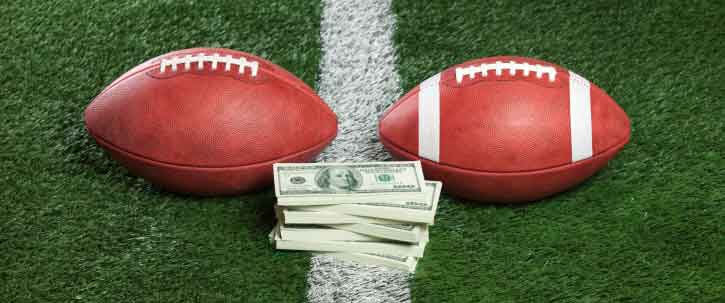
A federal district judge ruled today that the NCAA violated antitrust laws when it denied college athletes any compensation for revenue generated by the use of their names and likenesses, CBS Sports reports.
An appeal is likely, since the NCAA disagreed with the ruling:
We disagree with the Court’s decision that NCAA rules violate antitrust laws. We note that the Court’s decision sets limits on compensation, but are reviewing the full decision and will provide further comment later. As evidenced by yesterday’s Board of Directors action, the NCAA is committed to fully supporting student-athletes.
—NCAA Chief Legal Officer Donald Remy
The limits to which Mr Remy refers mean the association may cap compensation to athletes at the cost of attendance at their colleges, but that may not be good enough. In a strong rebuke, Judge Claudia Wilken enjoined the NCAA “from enforcing any rules or bylaws that would prohibit its member schools and conferences from offering their FBS football or Division I basketball recruits a limited share of the revenues generated from the use of their names, images, and likenesses in addition to a full grant-in-aid.”
That is, athletes could work out deals independent of the NCAA that would shake the very foundation of amateurism on which the association is based. Athletes could then get a share of the billions of dollars generated by television and from other sources, money that would come to them in the form of a trust fund set up in their names and accessible after they graduate, the New York Times reports.
What this means to me is, college athletes will soon no longer have to pretend they’re also students; they’ll be just like pro athletes, working for money, and in my opinion, it is a victory they deserve, even if it’s reversed on appeal.
I still think those athletes who qualify for admission to the academic institutions in whose names they play should be allowed time to attend classes and complete their degrees. But when we hear about college athletes who can’t even read at a third-grade level, as we reported earlier this year, it’s time to call a spade a spade, for the good of everyone—and every institution—concerned.
Judge Wilken even suggested that antitrust violations aren’t really the place for these debates and the courts may not be able address the root causes of these problems. “It is likely that the challenged restraints, as well as other perceived inequities in college athletics and higher education generally, could be better addressed as a policy matter by reforms other than those available as a remedy for the antitrust violation found here,” she wrote in her 99-page ruling. “Such reforms and remedies could be undertaken by the N.C.A.A., its member schools and conferences, or Congress.”
