

Elevated levels of lead were discovered on March 9 in the water coming out of water fountains at schools in Newark, New Jersey, but officials don’t believe the contamination causes any serious health risks, the Associated Press reports.
The US Environmental Protection Agency sets the limit for lead at 15 parts per billion in drinking water, and levels at some of the schools were higher, prompting officials to shut off the water at those schools until remediation efforts could take effect.
The rule, created by the EPA in 1991, replaced the previous action threshold of 50 ppb, and set a maximum contaminant level goal of zero for lead in drinking water. The EPA also established a treatment technique to reduce corrosion of both lead and copper within the distribution system.
Many of the school buildings in Newark are old. In terms of lead in the drinking water, that means they were built before June 1986, when the EPA made it illegal to “use … any pipe, any pipe or plumbing fitting or fixture, any solder, or any flux … in the installation or repair of (i) any public water system; or (ii) any plumbing in a residential or non-residential facility providing water for human consumption, that is not lead free.”
But schools weren’t absolutely required to replace pipes that had been installed before June 1986, even if the contained lead.
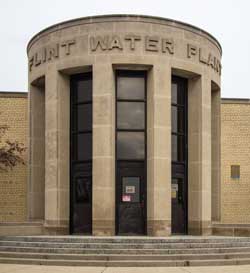
The nation has turned its attention to lead in the drinking water since elevated levels of lead were discovered in the water supply in Flint, Michigan, earlier this year. Schools there ran public drives to build up a supply of bottled water for students and staff to drink and remain hydrated.
Bottled water and water coolers have been delivered to the schools in Newark, and there’s no call for collection or any further action from the public at this time. Just don’t drink the water at those schools.
In the city of Newark, elevated levels have not been detected, a piece of evidence that would seem to point school officials and technicians from the state Department of Environmental Protection toward pipes or other water-delivery equipment in the schools themselves.
“I understand in the Flint environment that any sign of elevation is going to make everyone go haywire, but here, the water system in Newark is still safe, it’s still drinkable,” the AP quoted Newark Mayor Ras Baraka as saying. “A lot of our buildings are old. That speaks to infrastructure, the reason why we need new schools.”
A similar situation developed in the area of Tacoma, Washington, last month.
Routine testing uncovered high lead levels in water fixtures at Kopachuck Middle School and Voyager Elementary School in Gig Harbor, the News-Tribune reported in early February.
The Peninsula School District said in a letter to parents that the problems appeared to be isolated to one drinking water fixture at Kopachuck and one sink in the music room office at Voyager. The fixtures were replaced.
“Based on the type of testing, results identified specific problematic fixtures,” the district was quoted as saying.
According to the Centers for Disease Control and Prevention, you can’t see, taste, or smell lead in the drinking water. The only way to determine how much lead drinking water contains is to have it tested (EPA reports based on ZIP Codes; most reliable: state-certified labs).
If the level of lead in the water is close to the 15-ppb threshold, it might help to drink or cook with only water that comes out of the tap cold, the CDC says. “Water that comes out of the tap warm or hot can contain much higher levels of lead. Boiling this water will NOT reduce the amount of lead in your water.”
The Newark school system has 35,054 students, down from 48,433 in 1990.
