

In separate, unrelated incidents, young people committed petty crimes against property, namely school buildings, in the Baltimore area last week, the Baltimore Sun reports here and here.
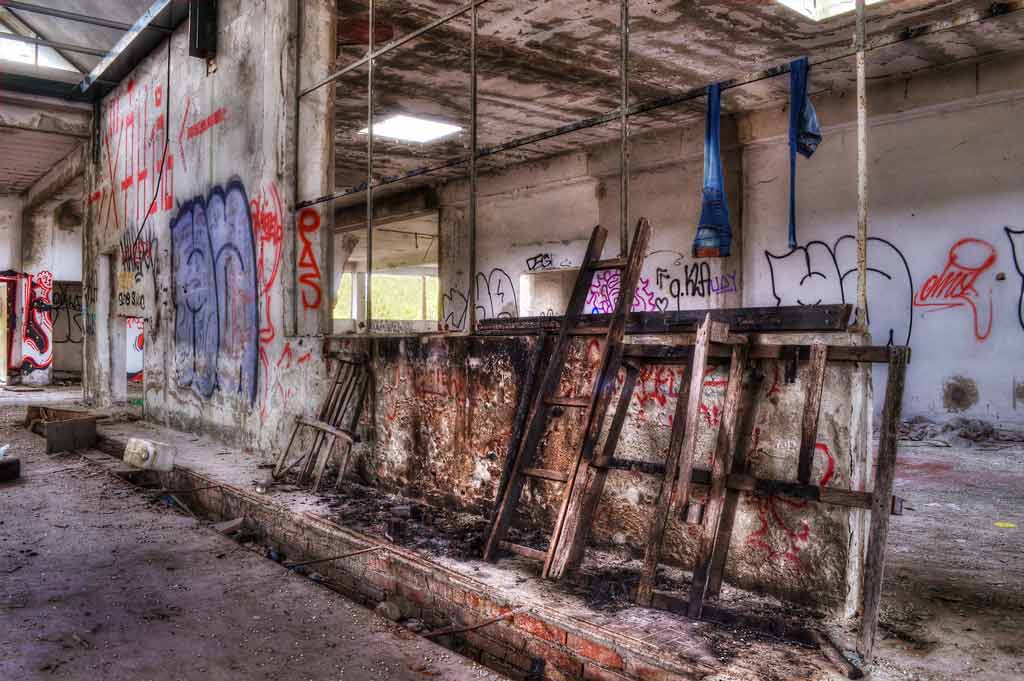
No one was hurt, but property was damaged at two Baltimore-area schools (not pictured).
Incident 1: Two teenagers in Anne Arundel County were arrested and charged with burglarizing Glen Burnie High School early yesterday. The two teens reportedly admitted to police that they had “scaled the interior fence and entered the school through an unlocked door.”
Incident 2: Three teens broke into and vandalized Violetville Elementary and Middle School in Baltimore City on Wednesday. “It seems as though the intention was to destroy property. We are waiting for an estimated cost of repair,” the Sun quoted school spokeswoman Edie House as saying. Surveillance video cameras recorded the teens using a fire hose to spray water and turning on the sprinkler system. Water was “cascading everywhere,” Ms House said. No arrests have been made in this case.
University studies about juveniles who commit petty crimes examine topics like recidivism, escalation to more serious crimes that harm people instead of just property, and an increased likelihood that the juveniles will drop out of school and fall into the “prison pipeline.”
Amanda McMasters, a graduate of Western Oregon University, Monmouth, wrote a senior thesis last year entitled “Effective Strategies for Preventing Recidivism Among Juveniles.” The probability juveniles have of repeating their offense depends, in part, on the interventions Baltimore City and Anne Arundel County may be able to use.
She identifies some of the qualities that make one type of intervention more effective than another. An effective intervention strategy will:
- Continuously evaluate, manage, & assess the entire caseload for intervention specialists
- Be sensitive & encourage youth to grow from within; enhance their intrinsic motivation
- Ensure that treatment options are part of the adjudication process in the right amount
- Emphasize cognitive-behavioral strategies by not just lecturing; practice what you preach
- Increase positive reinforcement & keep learning (youth learn new skills like sponges)
- Not let positive reinforcement block negative reinforcement for inappropriate behavior
- Engage young people in whatever pro-social supports exist within their communities
Ms McMasters’s paper includes a good bibliography, and I would recommend any source she chose as further reading if you’re interested in helping these juvenile offenders. “Rehabilitation,” she said in an email message, “rather than harsher punishment, is the best method for reducing recidivism. I would rank Cognitive Behavioral Therapy as the most effective in helping at-risk youth make positive changes in their lives. Instead of just using punishment and locking them up as a deterrent, CBT offers to correct thinking errors, improve social skills which these kids often lack, and tries to change the behavior and thought process that drives delinquency.”
Ms McMasters told Voxitatis she has spent the last two years working in a juvenile lock-down facility, and while there, she has noticed “more positive change in youth when staff and officers take the time to work with youth on thinking errors, skill building, and rehabilitative measures, rather than just punishment.”
Programs like “Scared Straight” or any long-term secure confinement for petty crimes, she said, would be “most ineffective in reducing criminal activity in youth. … It has been proven to be more harmful to a juvenile in the system than helpful.”
And federal research supports those opinions, according to the National Institute of Justice. Two meta-analyses, the institute reports, “found that participation in Scared Straight-type programs increases the odds that youth will commit offenses in the future.”
