

When the Glow House’s brand trip to the Bahamas in June came under criticism for featuring teens in skin-bearing swimwear, it sparked more than Instagram backlash. As Corinne Kreider writes in the student newspaper at Edina High School in Minnesota, it raised questions about how teenfluencers are treated, what influence they have, and what protections they deserve.
Influencer “houses” like the Glow House, where creators live or travel together to produce content, have multiplied in recent years. While some are aimed at young adults, an increasing number are targeting teen-to-teen audiences. These collaborations attract brand sponsorships and generate millions of views, but they also raise concerns about commercialization and the risks of online fame at such a young age.
Brand trips can unite two audiences under the same content, which makes them incredibly lucrative. Ross E Pitcoff, an entertainment lawyer, writes that brand trips “are often promoted as feel-good experiences … but the business side … is far from casual,” pointing to risks when expectations aren’t clearly defined.
Those risks don’t stop at contracts and liability. They also extend into the way attention is earned on these platforms — and who benefits from it. When audiences include minors, both as influencers and as followers, the risks escalate. Pamela Rutledge, PhD, director of the Media Psychology Research Center and faculty at Fielding Graduate University, notes that as their fame grows, it can be difficult for teenfluencers to maintain their sense of identity. “Kidfluencers are allegedly showing their fans their authentic self, and if they reveal too much of themselves online, they run the risk of letting the feedback that they get from their fans define their identity, rather than their intrinsic motivations,” she writes.
At the center of these concerns is a simple but powerful driver: attractiveness.
The Vortex of Pretty Privilege
One factor driving engagement is what social scientists call “attractiveness bias.” In fact, a 2025 meta-analysis in the Journal of the Academy of Marketing Science concluded: “Social media influencers’ credibility and attractiveness fully mediate their impact on consumer responses, including ad attitude, brand attitude, engagement, and purchase intention.” The authors added that “attractiveness and brand attitude have the highest effect on engagement, while credibility exhibits the highest total effect on purchase intention.”
Translated from the language of marketing science, the study found that what makes influencers effective often has less to do with what they say and more to do with how they look. To use Corinne’s language, referring to two popular teen influencers: “The ground these girls walk on is kissed, even though they are the most mediocre and unoriginal people on the internet.”
But the effect is not simple. Another study published in Psychology & Marketing (2025) found that influencers who are perceived as too attractive may actually lose relatability and see less engagement. “Extreme beauty can backfire,” the authors note, “if audiences feel the standard is unattainable.”
Whether it works or backfires for the influencer, the downstream effects are felt most strongly by the audience watching. Either way, what may bring profits for sponsors often comes at a cost to both the teen influencers and their peers watching from home.
Internal research by Instagram, revealed in The Wall Street Journal and later reported in Psychology Today, acknowledged: “We make body image issues worse for 1 in 3 teen girls.”
A UK survey by the mental health charity Stem4 found that three out of four 12-year-olds already disliked their bodies, with many citing social media as the trigger. Nearly half reported withdrawing from socializing or over-exercising after being bullied or trolled about their looks.
The result is a cycle: influencers gain attention because they are conventionally attractive, and the more they are rewarded, the more their young audiences internalize narrow standards of beauty. What boosts engagement metrics for advertisers can erode confidence, create envy, and deepen insecurities among millions of teens.
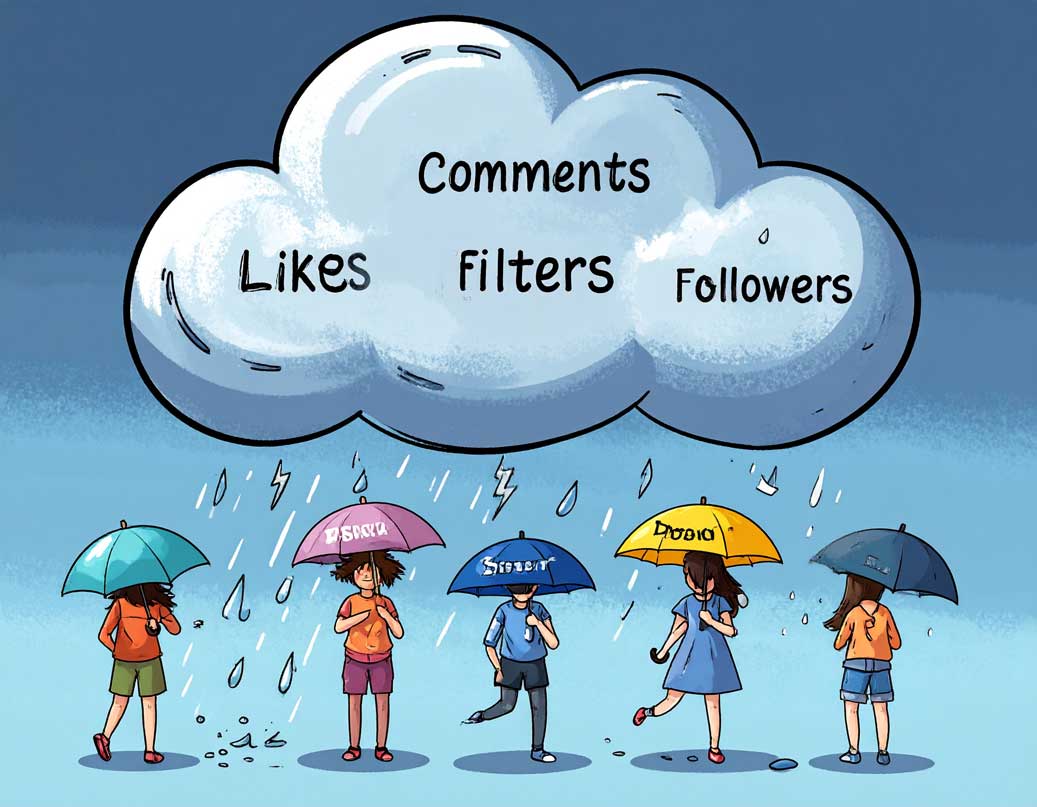
Scholars studying adolescent development say the platforms themselves are structured in ways that intensify these pressures.
On TikTok, this often translates into viral videos where the content is secondary to the creator’s appearance. Research by Sophia Choukas-Bradley and colleagues has documented how these dynamics feed into adolescent girls’ body image concerns, reinforcing narrow beauty standards and fueling cycles of envy. “We propose that the features of [social media] (e.g., idealized images of peers, quantifiable feedback) intersect with adolescent developmental factors … and sociocultural gender socialization processes … to create the ‘perfect storm’ for exacerbating girls’ body image concerns,” they write.
Indeed, the psychology of social comparison is well established. A 2023 study of more than 200 high school students found that higher levels of social media addiction were associated with lower self-esteem, with body image as a key mediator. That suggests that endless feeds of “perfect” images may not just reflect pretty privilege — they can amplify insecurities among young viewers.
So as young girls scroll through these feeds, many come away feeling more inadequate, even if they know on some level that it’s curated. That’s where we get the links to anxiety, depression, and eating disorders.
Legal and Policy Responses
These harms aren’t going unnoticed. Policymakers in several states are beginning to respond with new protections for minors in the influencer economy.
California, for instance, recently passed SB 764, requiring that minors who appear in more than 30% of monetized content receive a proportional share of earnings held in trust until adulthood. Illinois, Minnesota, and New York have passed similar laws aimed at protecting young influencers from exploitation.
When he signed SB 764, Gov Gavin Newsom of California said: “A lot has changed since Hollywood’s early days, but here in California, our laser focus on protecting kids from exploitation remains the same. In old Hollywood, child actors were exploited. In 2024, it’s now child influencers. Today, that modern exploitation ends through two new laws to protect young influencers on TikTok, Instagram, YouTube, and other social media platforms.”
Still, the tension remains. Teen influencers can enjoy fame, income, and creative expression, but they also face heightened risks of exploitation, objectification, and comparison culture. As the Glow House controversy illustrates, what might look like a glamorous brand trip to the Bahamas can quickly spark broader debates about beauty standards, parental oversight, and the responsibilities of platforms.
“The younger generations are watching their every move,” Corinne wrote in Edina. “That is terrifying, but it is also powerful.”
That leaves a final question: What kind of role models will these teenfluencers become?
Researchers suggest that if influencers and the brands that sponsor them embraced more inclusive standards of beauty and genuine diversity, social media could shift from amplifying envy to modeling healthier forms of self-expression. For now, though, the combination of pretty privilege and profit continues to shape what millions of teens see every day.
