

Over the summer, a junior at Columbus High School in Nebraska turned a lesson from the classroom into a life-saving action, reports Jay Marino in the school’s student newspaper.
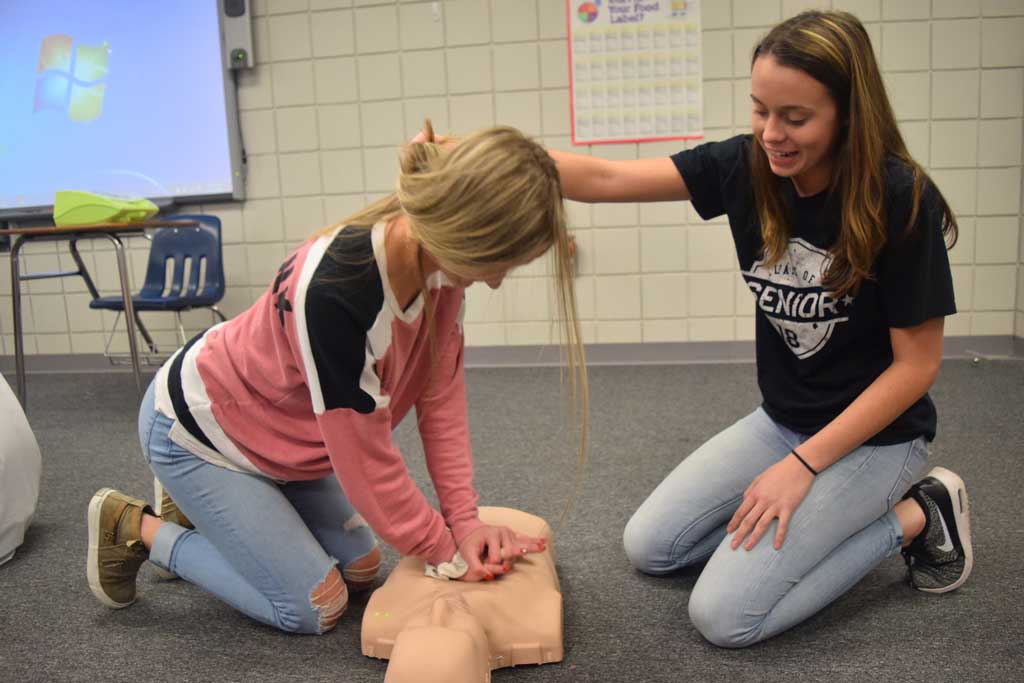 CPR instruction (Celia Looney/Flickr Creative Commons)
While visiting the Pawnee Plunge Water Park, a popular summer recreation destination featuring water slides, a lap pool with a high dive and climbing wall, and various other amenities, Ashley De La Cruz-Martin encountered a man in distress and, drawing on CPR training she had learned in Health Sciences II, kept him alive until first responders arrived.
“At first I was nervous, not gonna lie,” she said. “I started with 30 compressions, two breaths, 30 compressions, two breaths. I was pretty nervous because he started getting purple and bluish … so I just continued the CPR until the people came.”
Ashley said she first thought the man was suffering from heat stroke but quickly realized the need to perform CPR. The skills came directly from class: “Yes, I took Health Sciences II last semester, my sophomore year, and it was Ms Kallhoff. I loved the class, by the way.” She credited her teacher and the course for giving her the knowledge and confidence to step in when it mattered most.
Now back at school, Ashley admits the sudden attention has been overwhelming, but she focuses on the outcome: “I’m glad he’s okay,” she said. “I just feel so appreciated and thankful. I’m thankful for all the teachers and people who have been supportive of me, and it helps me continue the career path that I want to be.” Her calm under pressure and quick response highlighted how even one semester of training can make a difference in the real world.
Stories like Ashley’s underscore the importance of basic emergency skills for all students. Whether it’s CPR, the use of an AED, stopping someone from bleeding, or administering Naloxone in the event of an opioid overdose, these are skills that can save lives in the moments before paramedics arrive. Her example shows that preparation in the classroom can translate directly into courage in the community and, sometimes, the chance to give someone back their tomorrow.
