

On average, adolescents engage in risky behavior more frequently than adults. And although the learning styles of adults and adolescents vary widely, a new study out of London reinforces existing research that shows adolescents learn lessons more clearly if they are seeking rewards than if they are trying to avoid punishments.
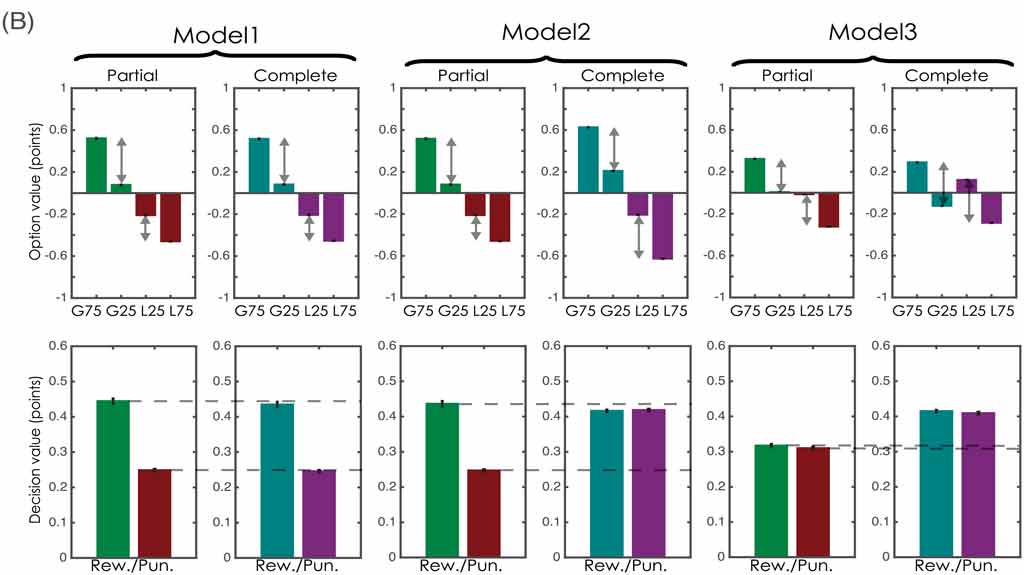
Adults are equally likely to learn by avoiding punishment as by seeking reward.
Adolescents, on the other hand, respond much better to reward-seeking strategies. (CC)
Research findings published last week in PLOS Computational Biology show that, on average, teachers and parents have a better chance of modifying adolescent behavior if they offer the kids $5 for, say, cleaning their rooms than they would have of getting their kids to clean their rooms by telling them they’ll take $5 away.
From a mathematical perspective, the kid is down $5 either way, but the $5 isn’t the real issue; what parents really want is for their kids to clean their rooms.
“Our study suggests that adolescents are more receptive to rewards than they are to punishments of equal value,” said senior author Sarah-Jayne Blakemore, of the Institute of Cognitive Neuroscience at University College London. “As a result, it may be useful for parents and teachers to frame things in more positive terms. … Our study suggests that the reward-based approach is more likely to be effective.”
They also found that adults seem to pay better attention (and modify their behavior accordingly) based on knowledge of the projected outcome. That is, if adolescents are told the consequences of certain behavior, it doesn’t really sink in.
Parents and teachers, of course, have known about this tendency for a long time—probably since they had tweens or teenage students in their lives. What this new study does, though, is use a unique methodology: researchers used mathematics and the science of computational modeling to describe (and quantify) how students learn and how they make decisions. They have thus added to the body of literature that suggests schools should focus more on the reward side of teaching and less on the punishment side.
