

Late last month, the Education Fund from the Leadership Conference on Civil Rights and Human Rights, along with five other advocacy and research groups, released the policy paper “Nondiscrimination in Dress and Grooming Codes” with nine suggestions for schools, Education Week reports.
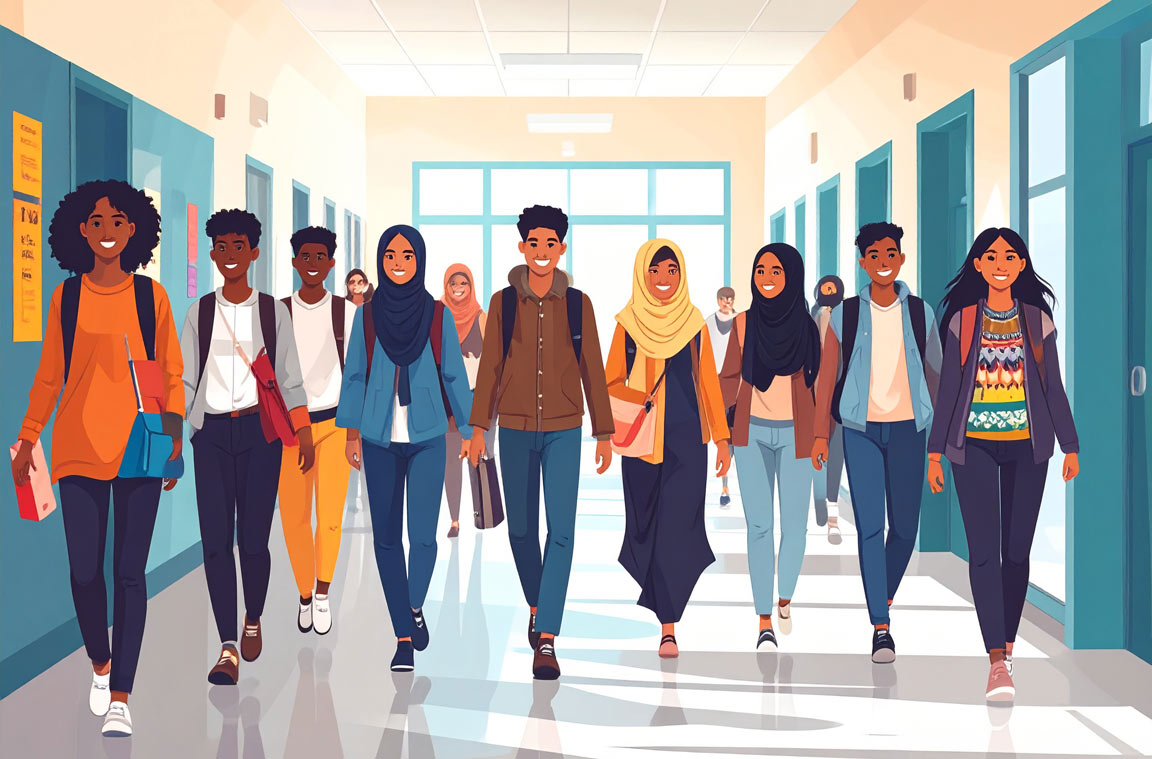
The brief aims to assist schools in developing dress codes that are fair, inclusive, and free from bias. Although non-binding, the guidance reflects growing concerns that traditional dress code policies can unfairly affect students based on race, gender, or cultural expression, leading to unequal treatment and unnecessary conflicts.
The brief’s recommendations focus on clarifying schools’ civil rights obligations, removing vague and subjective rules that allow inconsistent enforcement, and explicitly allowing students to express their racial, ethnic, cultural, and religious identities. It calls for gender-neutral language in dress codes and cautions against sex-based distinctions that reinforce stereotypes or exclude students based on gender identity or expression.
The document also urges schools to strengthen accountability. Suggested measures include providing examples of unlawful discrimination in policy materials, collecting and publishing data on how dress codes are enforced, conducting anonymous student climate surveys, and ensuring that penalties for dress code violations don’t result in lost learning time. Finally, the brief emphasizes the importance of training school staff to reduce bias and improve cultural understanding in enforcing rules.
Advocates argue that these changes could help reduce tensions when students feel targeted or marginalized by dress code enforcement. By grounding dress codes in fairness, clarity, and respect for individual identity, the brief aims to decrease disparities, protect students’ rights, and foster a more positive school climate.
