

Writing on his Substack, economist Paul Krugman suggests that the Iran War has resulted in President Donald Trump making an undeniably “strong new case for renewable energy,” whether he intended for that to be one of the outcomes or not.
The reason, as Mr Krugman succinctly puts it, is that “the wind and the sun don’t need to transit the Strait of Hormuz.”
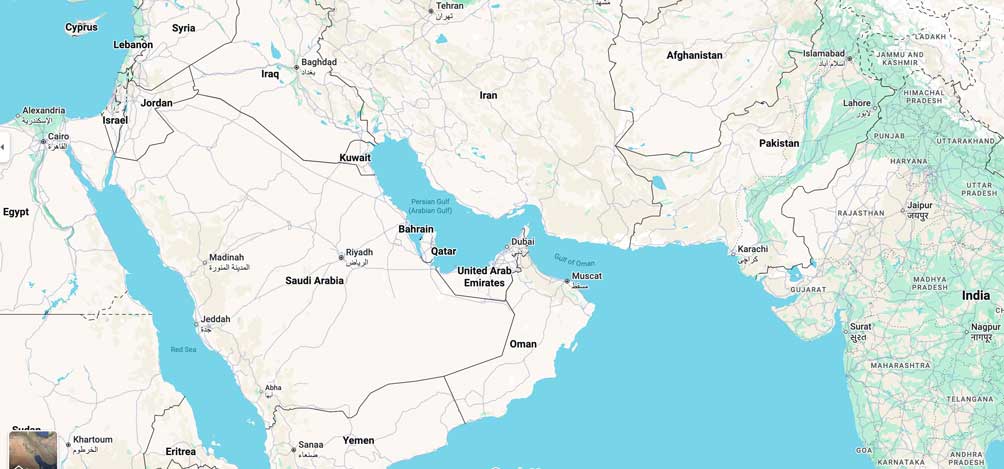 Strait of Hormuz (Google Maps)
Editorial
Approximately 20% of the world’s crude oil and nearly one-third of global liquefied natural gas (LNG) must transit the Strait of Hormuz.
With the Strait effectively closed by Iranian forces since March 1, the “lifeline” of the global economy has been cut. Unlike oil, which must be drilled in one hemisphere and shipped through a war zone to reach another, the wind and sun are harvested where they are used.
“In a dangerous world,” he writes, “it’s infinitely safer to rely on the sun and the wind than to depend on fossil fuels that must be transported long distances, from nations that are untrustworthy, often exploitative, and located in regions that frequently devolve into war zones.”
Furthermore, relying on nations that kill protesters, etc., to power our schools and homes is more than a moral failure; it’s a strategic liability.
Maryland gas prices have spiked by 50¢ in a single week because oil is a global, fungible commodity. A disruption in the Persian Gulf dictates the cost of a commute in Baltimore. In contrast, once a solar farm or wind turbine is built, the “fuel” is free and immune to geopolitical extortion, leading to price stabilization.
In a war, centralized fossil fuel infrastructure (tankers, refineries, pipelines) is a high-value target. Renewable energy, often decentralized and modular, creates a “mesh” of power that is significantly harder for an adversary to disable in a single strike.
The assassination of Ayatollah Khamenei has triggered retaliatory strikes against Gulf energy infrastructure. By tethering our economy to these regions, we ensure that every regional religious or political conflict becomes an American economic crisis.
From Environmentalism to Independence
The 2026 war has shifted the “Renewable Narrative” from one of sacrifice to one of self-reliance.
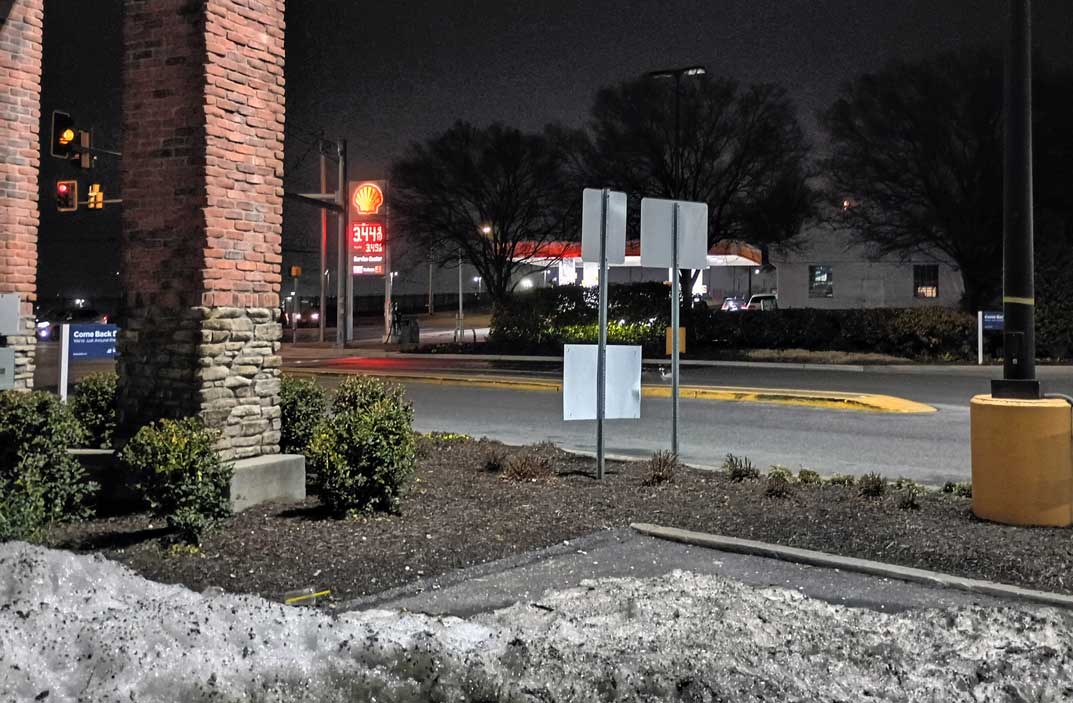 Maryland gas prices Thursday (Voxitatis)
The US is currently seeing a surge in “safe-harbor” renewable projects. With gas prices trending toward triple-digit increases if the Strait remains closed for a month, the “payback period” for home solar and batteries has dropped significantly.
In a world where nations we depend on are “untrustworthy and often exploitative,” the most patriotic and pragmatic choice for 2026 is an energy system that cannot be held hostage. Whether intended or not, the current administration has proven that true national security is green.
